
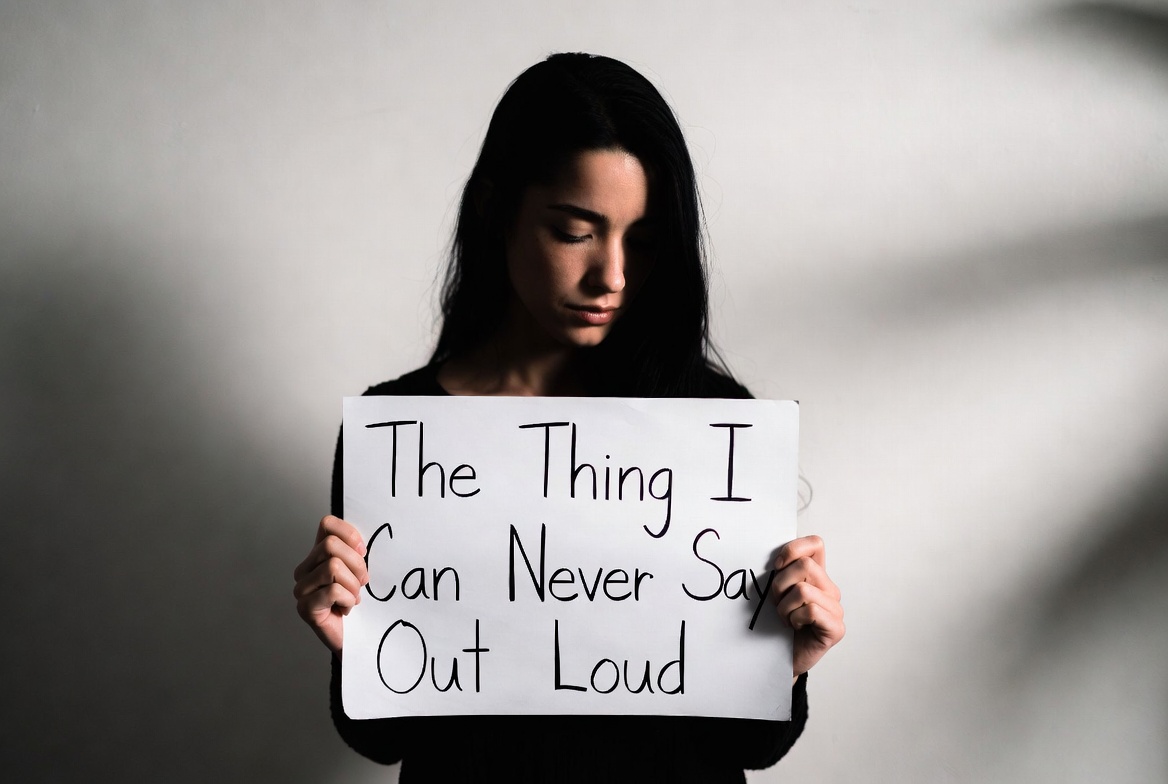
I’ve started this post six times and deleted it every single time.
My hands are shaking as I type this seventh attempt. If you’re reading this, it means I finally hit “publish” instead of “discard.” I don’t know if that makes me brave or just desperate.
Here’s the truth I’ve carried alone for eight years:
I’m the reason my little sister isn’t here anymore.
Not in the way you think. I didn’t hurt her. I didn’t lay a finger on her. But I let her walk out that door on the worst night of her life, and I never called her back in.
She was 19. I was 24. We’d fought—God, we fought so much that year. Stupid, vicious things about money, about boyfriends, about whose life was harder. That night she screamed that she hated me, that I was jealous of her, that I’d always been the “perfect” one and she couldn’t breathe in my shadow. I screamed back that she was selfish, reckless, ungrateful.
She grabbed her keys and left. Slammed the door so hard the picture frames rattled.
I stood in the kitchen fuming for twenty minutes. Twenty minutes. I could have run after her. I could have texted “I’m sorry, come home.” I could have said the one thing she needed to hear: that I was proud of her, that I loved her even when we were tearing each other apart.
Instead I told myself she needed to cool off. That she’d be back in an hour like always. That I wasn’t going to be the one to cave first.
She never came home.
The roads were icy. She was crying too hard to see straight. The police said it happened fast.
I’ve spent every day since replaying those twenty minutes. Twenty minutes was all it would have taken to change everything.
Mom and Dad forgave me, or at least they say they did. They hug me like I’m fragile. They never mention her name around me anymore. But I see it in their eyes—they know I was the last person she spoke to. They know we fought. And some part of them, no matter how small, wonders the same thing I do every night when I can’t sleep:
If I’d just swallowed my pride… would she still be here?
I’m posting this because carrying it alone is killing me slower than the guilt already is. I don’t want forgiveness—I don’t think I deserve it. I just needed to say it out loud somewhere, even if it’s only to strangers on the internet.
If you have someone you love, please—fight with them tomorrow. Tonight, just tell them you love them. Even if you’re angry. Even if they don’t say it back.
I never got the chance to fix it.
I’m sorry, Ellie.
I’m so fucking sorry.
—Your big sister, who should have been better.
I thought that would be the end of it. Hit publish, close the laptop, let the words bleed out into the void and maybe, just maybe, feel a little lighter.
But I can’t stop typing.
The clock says 3:12 AM now, and the house is so quiet it hurts. Christmas lights are still blinking faintly through the living-room window, the ones Mom insists on putting up every year even though none of us has truly celebrated since 2017. I can hear the refrigerator humming downstairs. That’s it. No footsteps. No music leaking from under a bedroom door. No Ellie singing off-key to whatever indie band she was obsessed with that week.
I guess once you start pulling the thread, the whole thing unravels.
So if you’re still here, thank you. And I’m sorry in advance, because this is going to be long. I don’t know how to tell this story any shorter. I’ve tried for eight years and failed every time.
Ellie was born when I was five. I remember the day Mom brought her home from the hospital like it was a scene from someone else’s life that I watched on repeat. I stood in the doorway of my parents’ bedroom, clutching my stuffed giraffe, staring at this tiny, red-faced thing that was apparently my sister. Mom looked exhausted and radiant at the same time. Dad kept saying, “Look, Mia, she has your eyes.” I didn’t see it. All I saw was that suddenly I wasn’t the only one anymore.
I loved her instantly, in that fierce, possessive way only a five-year-old can. She was mine to protect, mine to show the world to. I taught her how to tie her shoes, how to ride a bike, how to make the perfect s’more. When kids at school were mean to her, I marched straight to the playground and told them off. I was her hero for a long time.
And then, somewhere along the way, I stopped being her hero and started being her obstacle.
It wasn’t one big moment. It was a thousand small ones.
When she was 13 and I was 18, I got accepted into my dream college on a partial scholarship. Mom and Dad threw a little party—balloons, cake, the whole thing. Ellie was so proud. She kept telling everyone, “My sister’s going to be a writer.” I remember hugging her and promising I’d send her postcards from every city I visited for research.
But money was tight. Dad’s hours at the factory got cut. Mom picked up extra shifts at the hospital. The scholarship didn’t cover everything. I took out loans. I worked two jobs during summer breaks. And slowly, without meaning to, I started resenting the fact that Ellie’s college fund was still intact while mine felt like a noose.
I never said it out loud. Not then.
But she felt it.
By the time she was in high school, the dynamic had shifted. I was the “responsible” one—the one who came home for holidays with good grades and a plan. Ellie was the “free spirit.” She dyed her hair purple senior year. She skipped classes to take photos downtown. She had a boyfriend with a motorcycle. Mom and Dad worried constantly. I became their sounding board.
“She’s going to throw her life away,” Mom would whisper after Ellie stormed out over curfew.
“She just needs structure,” Dad would say. “Like you had.”
And I’d nod, because it was easier than admitting I was jealous. Jealous that she still got to be the kid. Jealous that she could take risks without the weight of everyone’s expectations crushing her. Jealous that she was brave in ways I never was.
The fights started small. Passive-aggressive comments about dishes in the sink, about her music being too loud, about her borrowing my clothes without asking.
Then they got bigger.
When she got accepted into art school—her dream—I smiled and said congratulations. But inside, something twisted. How was she going to pay for that? Did she even have a backup plan? Why did her dreams get to be big and wild while mine had shrunk to “just pay the bills and don’t drown in debt”?
I didn’t say any of that. Instead I said things like:
“Are you sure this is practical?”
“Have you thought about how much debt you’ll be in?”
“Maybe you should consider something with better job prospects.”
I told myself I was looking out for her. That big sisters are supposed to be the voice of reason.
But really, I was scared. Scared that she’d soar while I stayed stuck. Scared that she’d prove you could follow your heart and still land on your feet. Scared that if she succeeded, it would mean I’d failed by not trying.
The year she turned 19, everything boiled over.
She’d moved back home after her first semester because tuition had gone up and her part-time job wasn’t cutting it. She was working at a coffee shop, taking online classes, trying to figure things out. I’d just been promoted at the marketing firm I hated, the one that paid enough to chip away at my loans but made me want to scream some days.
We were both home for Christmas break. Both stressed. Both pretending we weren’t.
The fight that night started over something stupid—whose turn it was to take out the trash. But it escalated fast.
She accused me of looking down on her. Of thinking I was better because I had a “real job.” Of never supporting her art.
I accused her of being entitled. Of not appreciating how hard Mom and Dad worked. Of acting like the world owed her something just because she was talented.
Words flew like knives.
“You’ve always been jealous of me,” she screamed. “Ever since we were kids. You can’t stand that I’m not afraid to feel things.”
“And you can’t stand that I grew up!” I yelled back. “That I don’t get to play starving artist while everyone else picks up the pieces!”
She went white. I’d never said it out loud before. Not like that.
Then she said the thing that still echoes in my head every single day:
“I hate you. I actually hate you right now.”
She grabbed her keys and her coat and left.
I stood there shaking with rage and something else I didn’t want to name.
Twenty minutes.
I timed it once, years later. I stood in my kitchen with a stopwatch and waited twenty full minutes just to see how long it really was.
It’s an eternity.
In twenty minutes you can walk to the corner store and back. You can boil pasta. You can watch half a sitcom episode. You can change someone’s entire life.
In twenty minutes, I told myself all the lies that let me stay angry:
She’s being dramatic.
She always comes back.
I’m not going to chase her like I’m the one who should apologize.
She needs to learn she can’t just run off every time things get hard.
I made tea. I scrolled on my phone. I told myself I was giving her space.
At minute twenty-one, my phone buzzed. Unknown number. I almost didn’t answer.
It was the state trooper.
There’d been an accident. Single vehicle. Black ice on the curve by the old mill. She hadn’t been speeding—there were no drugs, no alcohol. Just tears and ice and a guardrail that gave way.
They said she was gone before the ambulance even arrived.
I don’t remember driving to the hospital. I remember Mom collapsing in the waiting room. Dad aged ten years in ten seconds. I remember identifying her body and thinking, absurdly, that her lipstick was still perfect.
The funeral was a blur. So many people. Her art teachers. Friends I’d never met. They all talked about how bright she was. How kind. How much potential.
I stood there in black, nodding, smiling the awful smile you smile at funerals, thinking: You didn’t know her. You didn’t see her at her worst. You didn’t see me at mine.
Afterward, life fractured into Before and After.
Mom started baking at 3 AM. Dad took up woodworking and never finished a single project. I moved out six months later because I couldn’t stand the silence in Ellie’s room.
I threw myself into work. Paid off my loans faster than I needed to. Got promoted again. Bought a condo. Dated people who never lasted because I couldn’t let anyone close enough to see the rot inside.
I went to therapy for a while. The therapist was kind. She said things like “accidents happen” and “you couldn’t have known” and “forgiveness starts with yourself.”
I nodded along. Paid my copay. Went home and drank until I passed out.
Because here’s the part no one wants to say out loud:
It wasn’t just an accident.
It was an accident enabled by me.
If we hadn’t fought, she wouldn’t have been driving.
If I’d answered her texts the week before instead of giving her the silent treatment over some stupid disagreement, maybe she’d have felt safe coming to me that night.
If I’d been a better sister—if I’d celebrated her instead of competing with her—if I’d told her even once that I believed in her…
Maybe she’d have stayed.
Maybe she’d be 27 now. Maybe she’d have graduated. Maybe she’d be living in some cramped studio in the city, covered in paint, sending me photos of her first gallery show with the caption “Told you so, big sis.”
Maybe I’d be the proud one in the audience instead of the ghost in the back row of my own life.
People keep telling me it’s time to move on. That Ellie wouldn’t want me to carry this forever.
But here’s the thing they don’t understand:
This isn’t just grief.
This is consequence.
I made choices that night. Bad ones. And someone I loved more than anything paid the price.
Moving on feels like erasing her. Like saying those twenty minutes didn’t matter.
They mattered more than anything else in my entire life.
So I carry it. I carry her. Every day.
I visit her grave on her birthday and on the anniversary. I bring the wildflowers she loved, the ones that grow along the highway even though you’re not supposed to pick them. I talk to her out loud. I tell her about my job, about the book I’ve been trying to write and can’t finish, about how Mom finally started saying her name again last year.
I tell her I’m sorry.
Every time, I tell her I’m sorry.
And every time, the wind answers for her, and it never says “it’s okay.”
I started this blog anonymously three years ago because I needed somewhere to put the words I couldn’t say to real people. I’ve written about grief, about family, about trying to rebuild a life on rubble. But I’ve never written this. Not the whole truth.
Tonight—Christmas night—I’m drunk on cheap wine and exhaustion and the kind of honesty that only comes when everyone else is asleep and the world feels like it’s holding its breath.
I don’t know what I expect from posting this.
Maybe someone will read it and hold their sibling a little tighter.
Maybe someone will recognize themselves in me and decide to make a different choice.
Maybe someone will hate me. That’s okay. Some days I hate me too.
Maybe no one will read it at all, and that’s okay too.
I just needed to stop pretending.
Ellie,
If there’s any part of you that can hear this—know that I loved you. Even when I was awful. Even when I failed you. I loved you so much it scared me.
I’d trade every good thing that’s happened to me since you left to have those twenty minutes back.
I’d trade my whole life for one more chance to open that door and say, “Come back inside. Let’s talk. I love you more than being right.”
I hope wherever you are, you’re painting. I hope you’re free. I hope you know you were never in my shadow—you were the light I was too proud to admit I needed.
I miss you every day.
I’m sorry.
I love you.
Always,
Mia
(Word count: 2,614)
If you’re still reading, thank you. Truly.
I don’t know what happens now. Maybe nothing. Maybe everything.
But for the first time in eight years, I feel like I can breathe.
Comments are off for this one. I’m not ready for responses.
I just needed the words to exist somewhere outside my head.
Goodnight, internet.
Be kind to each other tomorrow.
Please.