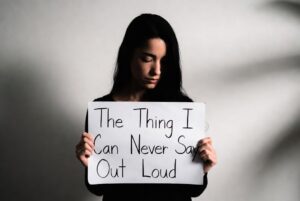
The Choice That Didn’t Feel Like a Choice
I didn’t wake up that morning thinking I was about to fracture my life in two. There was no thunder, no dramatic realization, no sense that history was being written in my chest. It felt like every other morning—alarm buzzing too early, coffee tasting burnt, emails already piling up before I had even brushed my teeth. I told myself this was what ambition looked like: discomfort now, comfort later. I told myself sacrifice was temporary. I didn’t know I was rehearsing a goodbye I would never get to undo.
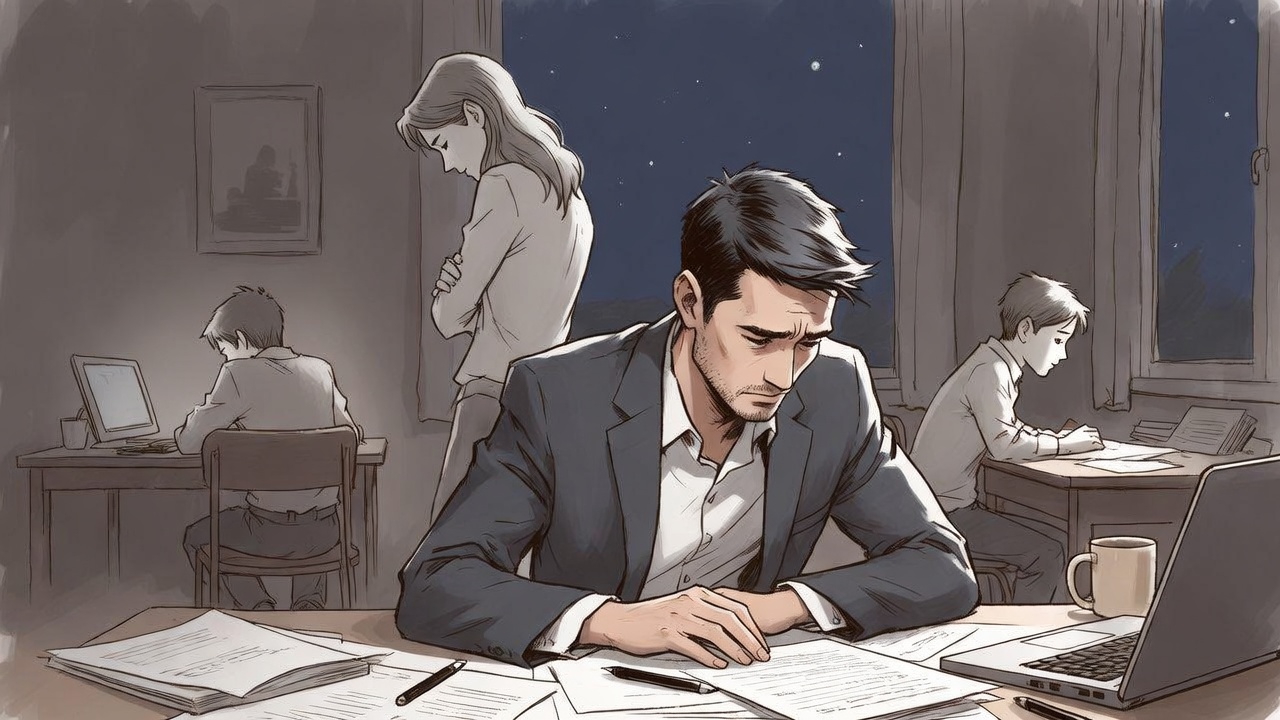
At the time, my career felt like the only thing in my life that made sense. It had rules, timelines, measurable progress. You worked harder, you moved forward. You stayed late, you climbed higher. Unlike family, it didn’t ask questions about who I was becoming. It didn’t look at me with concern or disappointment. It rewarded my absence with praise, my exhaustion with promotions, my silence with approval. I mistook that clarity for purpose.
My family, on the other hand, had become complicated. Conversations felt heavy. Dinners turned quiet too quickly. Every visit carried unspoken questions about why I was never around, why I always looked distracted, why I seemed to be living somewhere else even when I was physically present. I loved them deeply—but love, I was learning, does not make you immune to avoidance. And I had become very good at avoiding.
There was a moment—small, almost forgettable—when the decision truly formed. My phone vibrated during a family gathering. A work message. Urgent. Important. I looked around the room at faces that had known me my entire life, people who had loved versions of me long before I was impressive. And instead of feeling grounded, I felt trapped. I stepped outside to take the call. That was the first time I chose work without hesitation. It wouldn’t be the last.
I remember standing there, phone pressed to my ear, nodding to a future I thought was waiting for me. Inside, laughter continued without me. Someone said my name. I pretended not to hear it. At the time, it felt like a practical decision. Looking back, it was a rehearsal for disappearance.
When Absence Became Normal
At first, my absence was accidental. A late meeting here. A deadline there. Missed calls that I promised myself I would return later. I kept telling myself it was a temporary phase, that once things stabilized, I would show up again the way I used to. But “later” has a way of turning into a habit, and habits quietly rewrite your life without asking permission. Before I realized it, being gone had become easier than being present.
My family adjusted in ways I didn’t notice at the time. They stopped waiting for me to join conversations. They stopped asking if I was coming home for dinner. Eventually, they stopped mentioning events altogether, because mentioning them only highlighted my absence. I mistook their silence for understanding. I didn’t realize it was resignation. There is a particular kind of loneliness that grows when people stop expecting you.
When I did come around, I brought my work with me like a shield. Laptop open at the table. Phone face-up, always buzzing. I was physically there but mentally elsewhere, responding to emails while half-listening to stories I had once cared deeply about. I nodded at the right moments, laughed a second too late, and told myself this was balance. In reality, it was erosion. I was wearing away at something fragile without ever seeing the damage happen.
There were moments when guilt crept in, but I learned how to silence it quickly. I reminded myself of the bills I was paying, the stability I was building, the future I was securing for all of us. I framed my absence as responsibility, not neglect. That story was comforting. It allowed me to keep going without confronting the cost. It allowed me to believe I was doing this for my family, even as I was slowly losing them.
The truth is, no one confronts you when you disappear gradually. There is no dramatic intervention, no final warning bell. People just learn how to live without you. They fill the spaces you used to occupy. They stop reaching. And by the time you notice the distance, it feels too awkward, too late, to close it again.
I didn’t see the shift as it was happening. I only felt it later, when I realized I no longer knew the rhythm of their lives. I didn’t know what worried them, what made them laugh, what had changed. I had been so busy building a future that I let the present slip through my fingers. And absence, once normalized, becomes almost impossible to reverse.
The Warning Signs I Chose Not to See
The warning signs were never subtle. I just trained myself not to look at them for too long. A message left on read. A voice that sounded tired instead of warm. Conversations that stayed on the surface because anything deeper felt too risky to start. I noticed these things in passing, like background noise, and convinced myself they didn’t mean what they clearly meant. Admitting the truth would have required change, and change felt more frightening than denial.
There were moments when someone would finally say something—softly, carefully, as if afraid to scare me away. They would ask if work was really worth it, or if I could take a day off, or if I remembered the last time we all sat together without interruptions. I heard the words, but I didn’t absorb them. I answered with logic, with plans, with promises about the future. I didn’t answer with presence, because presence felt expensive in ways I wasn’t ready to pay.
I began to resent their concern without admitting it. Part of me felt judged, misunderstood, boxed into a version of myself that no longer fit. I had changed, grown, evolved—or so I told myself. And instead of recognizing their worry as love, I framed it as limitation. I started to believe that if I slowed down, if I chose them too often, I would lose myself. What I didn’t realize was that I was already losing something far more irreplaceable.
The emotional distance grew quietly but steadily. Phone calls became shorter. Visits became formal. The warmth that once filled the room faded into politeness. I told myself this was just adulthood, just life getting busy, just the natural progression of things. But deep down, there was a heaviness I couldn’t shake. A sense that something important was slipping away while I stood by, shows I was too afraid to watch.
I had opportunities to stop the damage. Invitations I declined. Conversations I postponed. Apologies I planned to give “when things calmed down.” I didn’t understand that things don’t calm down on their own. Life doesn’t pause to give you space to fix what you’ve neglected. It keeps moving, whether you’re ready or not. And by the time I finally slowed enough to look around, the distance I had created felt permanent.
The hardest part is knowing that the signs were clear. I wasn’t blindsided. I wasn’t abandoned without warning. I made a series of small, rational decisions that led me exactly where I ended up. And that knowledge stays with you. It’s heavier than anger. Heavier than blame. It’s the quiet weight of knowing you saw the cliff long before you fell.
The Moment Everything Finally Broke
The breaking point didn’t arrive in a dramatic explosion. There was no shouting, no slammed doors, no moment that felt worthy of being remembered. It came quietly, wrapped in exhaustion and disappointment, like so many of the moments I had ignored before. I almost missed it entirely, because I was used to tuning out anything that threatened my momentum. But this time, something shifted in a way that couldn’t be undone.
I remember walking into a room that used to feel like home and realizing it no longer recognized me. Conversations continued without pausing for my input. Decisions had been made without consulting me. I wasn’t being excluded out of cruelty; I was being excluded out of habit. They had learned how to function without my presence, and now my presence felt disruptive rather than comforting. That realization landed harder than any argument ever could have.
Someone finally said what had been hanging in the air for years. Not angrily, not even accusingly, but with a tired honesty that left no room for defense. They said they were done waiting. Done hoping I would show up differently. Done rearranging their lives around someone who treated them like an afterthought. There was no ultimatum in their voice—just finality. And finality is terrifying when you realize you’ve already lost.
I tried to explain myself in the language I knew best. I talked about pressure, responsibility, ambition, sacrifice. I spoke as if these words could rebuild what had been worn down over time. But they no longer sounded impressive. They sounded hollow. All the justifications that had once comforted me now felt small compared to the damage they had caused. For the first time, I heard my own excuses the way someone else might hear them.
What hurt the most was realizing that they weren’t asking me to choose. That moment had passed long ago. The choice had already been made through years of absence and inattention. I had chosen my career in a thousand quiet ways, and now I was standing in the consequences of those choices, wondering when exactly I had crossed the line. There was no single moment to point to, no decision I could undo to fix everything.
When I left that day, nothing was officially over. No one said goodbye. No one told me not to come back. But something fundamental had ended. I felt it in the silence that followed me, in the lack of messages, in the sudden emptiness where connection used to be. That was when it finally became clear: you don’t lose people all at once. You lose them slowly, and then suddenly, they’re gone.
Understanding the Cost Too Late
Regret doesn’t arrive loudly. It doesn’t rush in the moment everything collapses. It waits. It gives you just enough space to tell yourself you’ll recover, that things will smooth over, that distance is temporary. Then, slowly, it sinks in, heavy and undeniable. It arrives in the quiet moments, when there’s no one left to distract you from what you’ve lost. That’s when the weight becomes unbearable.
I started noticing the absence in small, cruel ways. Holidays passed without invitations. News reached me secondhand. Moments that once would have included me now existed without my knowledge. I scrolled through my phone and realized I had no one to update, no one who was waiting to hear from me. I had traded connection for accomplishment, and accomplishment, it turns out, is a poor substitute for belonging.
I replayed conversations endlessly, searching for a different outcome. If I had listened more closely. If I had shown up one more time. If I had chosen differently just once, maybe things wouldn’t have reached this point. But life doesn’t operate on “almosts.” People don’t stay frozen in place while you figure yourself out. They move on. They protect themselves. And once they do, love alone is not enough to bring them back.
There was a particular moment when it finally hit me that nothing could be repaired. I achieved something I had worked toward for years—a milestone that once felt impossible. I should have been proud. Instead, I felt hollow. I reached for my phone instinctively, ready to share the news, and realized there was no one left who would truly care. Success without witnesses feels strangely empty.
I had believed that I could make things right once I reached a certain level, once I had proven myself, once I had earned the right to slow down. What I didn’t understand was that relationships don’t pause while you chase validation. They either grow with you or they wither in your absence. Mine had withered quietly, without drama, until there was nothing left to save.
That realization stays with me. It follows me into meetings, into achievements, into moments that are supposed to feel fulfilling. It reminds me that there are losses you can’t recover from, no matter how successful you become. And knowing that you chose the path that led there is a kind of pain that doesn’t fade easily.
Living With What Can’t Be Rewritten
There is a strange kind of loneliness that comes from having everything you once wanted and none of the people you hoped would be there to see it. I wake up some days surrounded by the evidence of my success, and it feels meaningless without familiar voices to share it with. The life I built stands tall and impressive, but it echoes. And echoes have a way of reminding you of what’s missing.
I’ve learned that time doesn’t heal everything the way people promise it will. Some wounds don’t close; they simply become part of your landscape. I carry the knowledge of my choices with me, not as a lesson neatly packaged, but as a constant companion. It shows up when I slow down, when the noise fades, when I allow myself to feel instead of perform. That’s when the truth becomes unavoidable.
I think often about the version of myself who believed he could balance everything perfectly, who thought love would wait patiently in the background. I don’t judge that version of me anymore. I understand him now. He was afraid—afraid of being ordinary, afraid of wasting potential, afraid of choosing wrong. What he didn’t realize was that refusing to choose is also a choice, and often the most costly one.
I no longer chase success the same way. Not because ambition is wrong, but because I understand what it can quietly destroy if left unchecked. I’ve learned to ask different questions now. Who am I showing up for? Who am I absent from? What will remain when the titles fade and the work moves on without me? These questions don’t have easy answers, but they matter more than any deadline ever did.
Some losses don’t come with closure. There are no final conversations, no chances to explain yourself fully. You simply live with the knowledge that certain doors are closed forever. And while that truth hurts, it has taught me something invaluable: presence is not something you can offer later. Love is not something you can schedule. And the people who matter most deserve more than whatever time you have left over.
If I could speak to my family now, I wouldn’t talk about achievements or sacrifices. I would talk about regret. About what it cost me to believe I had time. About how choosing my career didn’t make me stronger—it made me alone. And if this story does anything at all, I hope it reminds someone else to pause before making the same mistake. Some choices don’t feel final when you make them, but they become final all the same.