
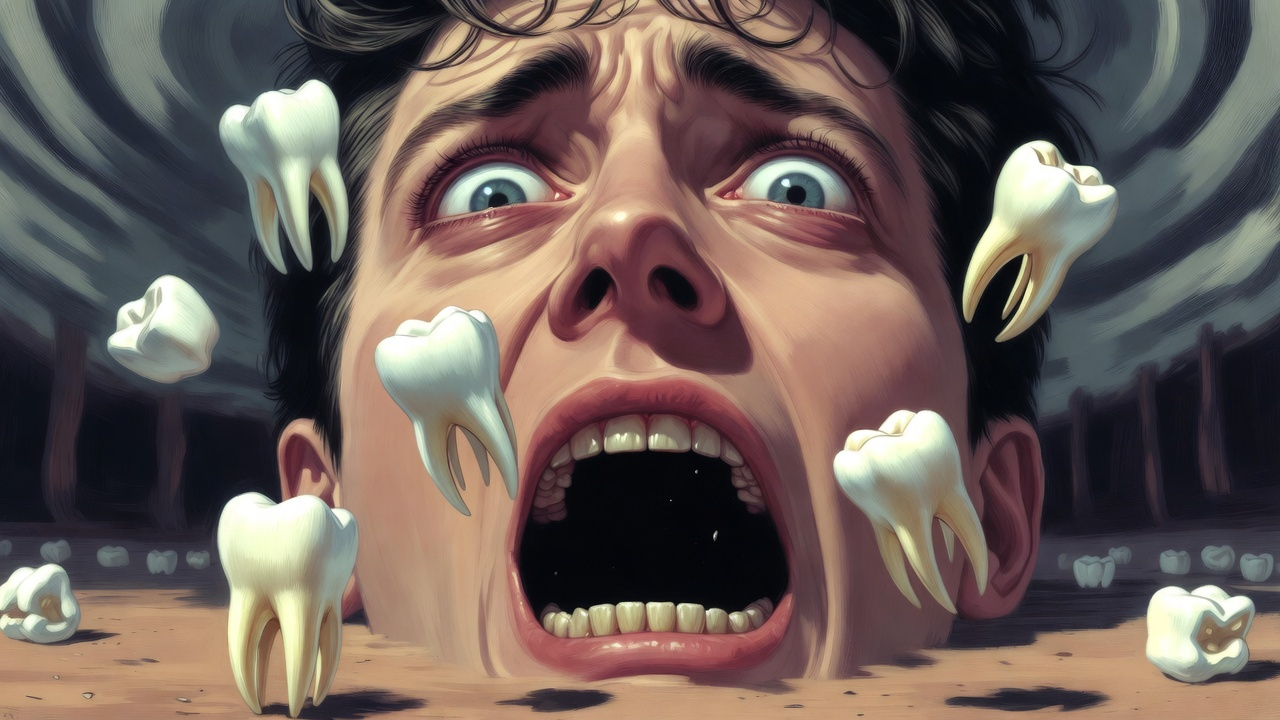
You open your mouth and feel a tooth wiggle… then another. Suddenly they’re crumbling, falling into your hand, or you’re spitting them out in panic. You wake up touching your real teeth just to make sure they’re still there.
If this has ever happened to you, you’re not alone. Teeth falling out is one of the most universally reported and emotionally intense dream themes on the planet.
Far from random, these dreams are your brain’s clear signal that something in your waking life is making you feel insecure, exposed, or on the edge of a big transition.
In this post, we’ll explore the actual sleep science behind teeth dreams, the six most common psychological meanings, how to decode the specific details in your dream, and practical steps to turn that sinking feeling into real confidence and clarity.
How Common Are Teeth Falling Out Dreams?
Extremely.
- The Typical Dreams Questionnaire ranks “teeth falling out” consistently in the global top five most frequent dream themes.
- Studies show lifetime prevalence between 20–40% in adults, with even higher rates during periods of stress, life changes, or self-image worries.
- They spike around job changes, break-ups, public speaking events, aging milestones, or any time you feel “on display.”
The Science Behind Teeth Falling Out Dreams
Your brain uses this vivid scenario for very good reasons:
1. Evolutionary Vulnerability
Teeth are primal tools for survival — eating, defense, social status. Losing them in a dream simulates a serious threat to your ability to function and appear strong. Modern psychology (threat simulation theory by Antti Revonsuo) shows the brain still runs these ancient “what if” scenarios to rehearse emotional responses.
2. Embarrassment & Social Exposure
REM sleep processes social emotions. When you feel judged, inadequate, or afraid of looking “less than,” your mind translates that into the ultimate public humiliation: losing teeth in front of others.
3. Continuity Hypothesis
Dream content mirrors daily life. Teeth falling out dreams strongly correlate with real-life feelings of instability, loss of control, or major identity shifts (new job, relationship change, moving, aging). The dream simply makes the feeling literal.
In short: your subconscious is flagging insecurity or transition — not predicting dental disaster.
The Six Most Common Psychological Meanings
1. Deep Insecurity or Fear of Judgment (The #1 Meaning)
This is the classic interpretation. The dream highlights worry about how others see you — your competence, attractiveness, or worth.
2. Major Life Changes or Transitions
Teeth represent stability. Losing them often signals you’re shedding an old version of yourself (new career, ending a relationship, becoming a parent, empty nest). The fear is real, but the dream shows you’re already in the process.
3. Loss of Control or Power
Feeling powerless at work, in a relationship, or with finances? Teeth falling out dramatizes that helplessness.
4. Communication Anxiety
Teeth are essential for speaking clearly. These dreams frequently appear before presentations, difficult conversations, or when you feel your voice isn’t being heard.
5. Aging, Health, or Appearance Worries
Common in midlife or during health scares — the dream reflects anxiety about time passing or losing youthful vitality.
6. The Positive Flip — Renewal & Growth
Sometimes the dream ends with new teeth growing in. This is your mind showing readiness for a fresh start and a stronger version of yourself.
Pay Attention to These Dream Details
- How the teeth fall
- Crumbling slowly → gradual loss of confidence
- Knocked out suddenly → sudden change or shock
- All at once → overwhelming transition
- Do you feel pain or blood?
- Pain = emotional hurt tied to the insecurity
- No pain = more about appearance than deep pain
- Are you hiding them or showing others?
- Hiding → shame and secrecy
- Others noticing → fear of public judgment
- New teeth growing?
Strong sign of resilience and positive change coming. - Recurring teeth dreams
Clear message that the underlying insecurity hasn’t been addressed yet.
Self-Reflection Prompts (Use These Tonight)
- In which area of my life right now do I feel most “exposed” or insecure?
- What big change or transition am I going through (or resisting)?
- Where am I worried about how others perceive me?
- What would “losing my teeth” mean in real life — and is that fear realistic?
- If new, stronger teeth grew in, what would that new version of me look and feel like?
- What small action could I take this week to feel more confident and in control?
What To Do Next: Turn the Dream Into Confidence
These dreams are helpful wake-up calls. Here’s how to respond:
1. Dream Journal Immediately
Write the dream + real-life stressors from the day before. Patterns appear fast.
2. Address the Root Insecurity
Pick one tiny step: update your LinkedIn, have the honest conversation, book the dentist appointment, or start a new habit that makes you feel stronger.
3. Daily Confidence Boosters
- Power pose for two minutes before bed
- Mirror work: say one kind thing about your appearance or abilities
- Progressive muscle relaxation to lower anxiety before sleep
4. Reframing Technique
During the day, visualize the dream but change the ending — teeth falling out, then strong new ones growing back quickly. Many people report the dreams soften or stop.
5. When to Seek Extra Support
If teeth dreams are frequent and linked to high anxiety or body-image issues, a short course of CBT or talking to a therapist delivers fast results.
Final Thoughts
Dreaming your teeth are falling out isn’t a bad omen — it’s your brain using one of the most primal fears we have to get your attention:
“Something in your life is making you feel insecure or unsteady right now. Let’s fix it while you’re awake.”
Listen to the message, take one small step toward feeling more solid, and watch both your confidence and your dreams improve.
You’ve got this. Those falling teeth are just the old version of you making room for a stronger one.
Have you had a teeth falling out dream lately? What was happening in your life?