
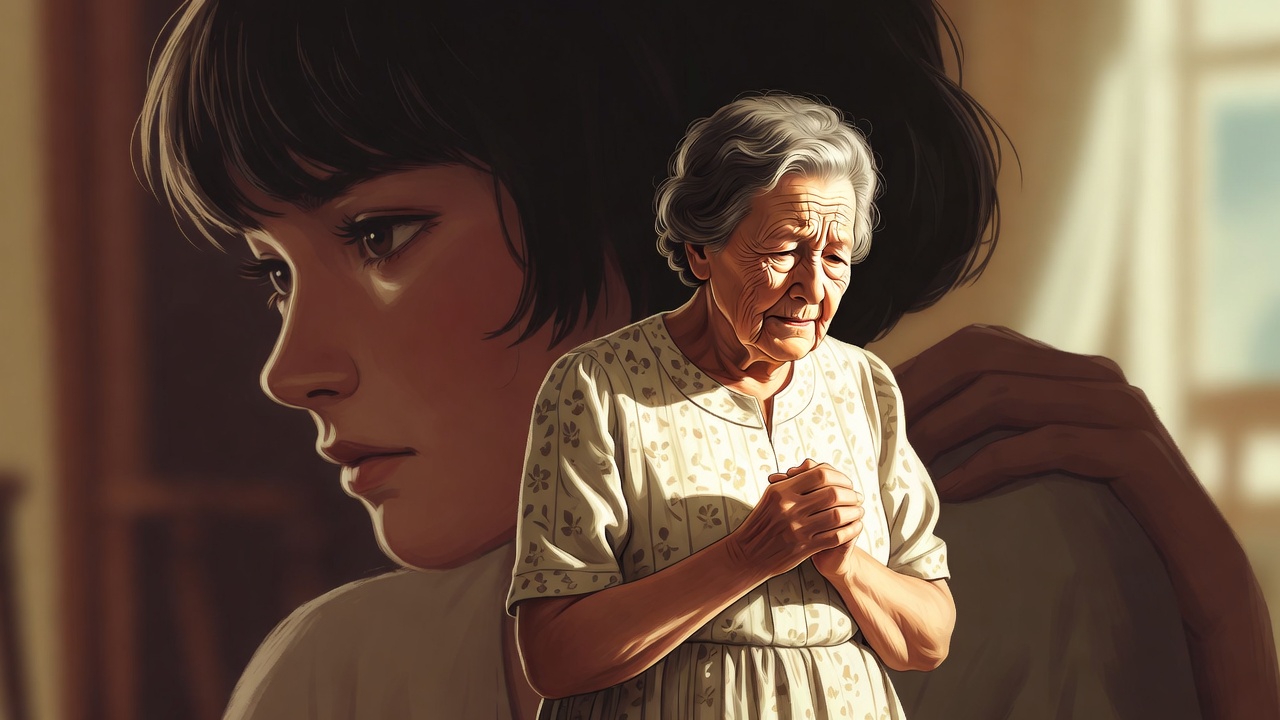
There are confessions we carry for years, hidden in the deepest corners of our hearts, buried beneath excuses, denial, and silence. This is one of mine. I was ashamed of my mother. Not because she was cruel. Not because she failed me. Not because she lacked love. I was ashamed because she was poor, uneducated, tired, and visibly worn by life. I was ashamed because she didn’t fit the version of “perfect” that the world kept showing me. And for a long time, I let that shame define how I treated the one person who had sacrificed everything for me.
When I was younger, I measured my worth through comparison. I compared my life to my classmates, my home to theirs, my clothes to theirs, and eventually, my mother to their mothers. Their moms wore clean, polished clothes. They spoke confidently in meetings. They drove cars. They carried themselves with pride. My mother walked everywhere. Her hands were rough from years of labor. Her clothes were faded. Her accent was thick. Her back slightly bent, her face permanently etched with exhaustion. Without realizing it, I began to see her not as my hero, but as my embarrassment.
At school, I learned how to perform confidence. I learned how to pretend. I learned how to carefully edit my story. When teachers asked about my parents, I spoke vaguely. When friends asked what my mother did for work, I changed the subject. When someone offered to drop me home, I panicked at the thought of them seeing our tiny, cracked house. Shame slowly became my shadow, following me everywhere, whispering that I had to be different, better, more impressive than the life I came from.
The worst part is that my mother noticed. She never said it outright, but mothers always know. She began standing farther away when she dropped me at school. She stopped asking about my friends. She hesitated before attending school events. She made herself smaller, quieter, less visible, as if trying not to exist too loudly in my world. And instead of seeing the pain in her eyes, I felt relief. I convinced myself that I was protecting both of us from embarrassment, when in reality, I was protecting only my fragile ego.
There were moments that should have shattered my denial, but I ignored them. Like the day my mother waited outside my classroom for hours because she didn’t understand the new dismissal schedule. I saw her through the window, sitting alone on a bench, clutching her worn handbag, scanning every face that passed. My friends laughed. My face burned. Instead of running to her, I pretended not to see her. I walked past her, head down, heart racing, and left her sitting there confused and waiting. That memory still follows me in quiet moments, heavy and unforgiving.
At home, she remained the same — gentle, giving, endlessly patient. No matter how cold I became, her warmth never faded. She woke before sunrise to prepare my meals. She stayed up late washing my clothes by hand. She prayed for me in whispers every night, believing that her sacrifices would one day open doors I could walk through freely. And while she poured everything into my future, I slowly built emotional walls between us, brick by brick, convinced that distance would somehow make me stronger.
What I didn’t understand then was that shame is not strength. It is fear dressed as pride. It is insecurity disguised as ambition. It grows from comparison, not truth. And it slowly eats away at love until regret is all that remains.
The Quiet Distance Between Us
As I grew older, that distance between my mother and me quietly widened. It wasn’t marked by loud arguments or dramatic fights. Instead, it was shaped by subtle avoidance, short answers, and an unspoken agreement to stay in separate emotional worlds. I stopped sharing my fears, my failures, and my dreams. She stopped asking too many questions, sensing my discomfort. We coexisted in the same house but lived in different realities, each pretending that everything was fine. And yet, beneath the surface, something precious was slowly slipping away.
The more I tried to blend into a world that celebrated comfort and status, the more I felt I had to hide the one person who symbolized my humble beginnings. I avoided inviting friends home. I lied about family outings. I invented stories about vacations we never took. I learned to reshape my truth into something more acceptable, something that wouldn’t invite pity or judgment. Each small lie created a larger gap between who I was and where I came from, until even I struggled to recognize myself in the mirror.
My mother, meanwhile, remained anchored in quiet resilience. Every morning she left before sunrise, walking long distances to reach work that barely paid enough to cover our necessities. She returned home exhausted, her body aching, her eyes heavy, yet she never allowed her fatigue to soften her love. She asked about my day. She reminded me to eat. She folded my clothes carefully, as if each piece held meaning. In her world, love was expressed through service, through sacrifice, through relentless giving. And I accepted it all without gratitude, mistaking her devotion for obligation.
There were moments when guilt tried to surface, but I buried it quickly. I told myself that ambition required emotional detachment. That to move forward, I had to cut ties with anything that reminded me of limitation. I convinced myself that one day, when I was successful, I would return and make everything right. That I would buy her better clothes, a better house, a better life. That future generosity somehow justified my present neglect. But time does not pause for intentions, and love does not wait for success.
One evening, after a particularly long day, I found her asleep at the kitchen table, her head resting on folded arms, a half-finished meal beside her. The light above her flickered softly, illuminating the deep lines etched into her face. For a brief moment, I saw her not as my mother, but as a woman worn thin by years of unacknowledged sacrifice. A woman who had carried responsibilities far heavier than her fragile frame should have endured. That moment should have awakened something inside me. Instead, I quietly turned off the light and walked away.
It is painful now to admit how easily I chose comfort over connection, pride over compassion, distance over devotion. But that is the truth of who I was. I didn’t hate my mother. I simply loved myself more. And in that selfish love, I overlooked the one person who deserved my loyalty, my respect, and my gratitude above all else.
When Shame Turns Into Regret
Life has a way of teaching lessons when it is already too late to correct them. For me, that lesson arrived quietly, disguised as ordinary moments I once overlooked. As I moved further into adulthood, chasing education, opportunity, and independence, my contact with my mother became less frequent. Days turned into weeks. Weeks into months. Our conversations shrank into brief phone calls, polite check-ins, and surface-level updates. I told myself that this was normal, that growing up meant growing apart. But deep down, I knew I was choosing distance, not just independence.
There were times she called simply to hear my voice. I could tell because she had nothing urgent to say. She would ask if I had eaten, if I was sleeping enough, if I was taking care of myself. The same questions, repeated every time, like a ritual of love. And every time, I answered quickly, impatiently, eager to return to my busy world. I treated her concern as interruption, not devotion. I didn’t realize that one day, I would ache to hear those same questions again.
During visits home, I became a guest rather than a child. I stayed out longer. I slept later. I scrolled through my phone while she spoke. I half-listened to stories I had heard a hundred times before. Each visit ended with her standing at the doorway, watching me leave, her eyes filled with words she never said. And each departure carried a heaviness I refused to name, because naming it would mean confronting my guilt.
The turning point did not arrive as a dramatic tragedy. It came through subtle realizations that slowly broke me open. One afternoon, I overheard relatives talking about how lonely she had become. How she spent evenings sitting quietly by the window, watching the road as if expecting someone. How she rarely laughed the way she used to. How she kept my childhood belongings neatly arranged, refusing to give anything away. That image of her waiting, holding onto memories of a child who no longer showed up, lodged itself into my chest and refused to leave.
Suddenly, moments I had buried began resurfacing. Her tired smile when I ignored her calls. Her hesitant voice when she asked if I would visit soon. Her long silences when I spoke only of myself. I began to see my behavior not as independence, but as emotional abandonment. And that realization was devastating. Shame, once a quiet companion, transformed into regret — sharp, relentless, and unforgiving.
I wanted to undo everything. To go back and choose differently. To sit with her longer. To listen more closely. To speak more kindly. But time does not rewind. It moves forward, carrying our mistakes with it, leaving us only with the weight of what we should have done. And in that growing weight, I finally understood what I had lost long before I realized it was gone.
The Day Everything Finally Broke
The day everything finally broke was painfully ordinary. There was no warning, no dramatic buildup, no final argument that hinted at what was coming. It began like any other morning, with routines and obligations pulling me in different directions. My phone rang while I was rushing out the door, and for a brief moment, I considered letting it go to voicemail. When I saw my aunt’s name on the screen, a strange heaviness settled in my chest, the kind that arrives before the mind understands why. I answered, and within seconds, the world I knew began to crumble.
Her voice trembled as she spoke. The words came slowly, carefully, as if she feared they might shatter upon release. My mother had collapsed earlier that morning. By the time help arrived, it was already too late. I stood frozen, phone pressed to my ear, unable to comprehend what she was saying. The room seemed to tilt, the air suddenly too thin to breathe. I kept waiting for her to correct herself, to say there had been a mistake, that my mother was fine, resting, waiting for me to come home. But no such correction came.
The journey back felt endless. Every mile replayed memories I had ignored — her laughter, her patience, her quiet sacrifices. Guilt flooded my thoughts, heavy and suffocating. I thought about every unanswered call, every rushed goodbye, every moment I had chosen pride over presence. I imagined her sitting alone, waiting, believing that one day I would show up fully. And the cruelest truth was that now, I never could.
When I arrived, the house felt unbearably silent. The familiar warmth that once filled every corner was gone, replaced by a hollow stillness that echoed with absence. Her chair sat empty. Her cup untouched. Her folded clothes still waiting to be put away. Each object seemed to accuse me, whispering reminders of all I had taken for granted. I moved through the rooms like a stranger, desperate to find traces of her, clinging to anything that proved she had truly existed.
Standing beside her, I felt a grief so deep it bordered on physical pain. My chest tightened. My hands shook. Tears came in waves I couldn’t control. I wanted to speak, to apologize, to explain, to confess everything I had never said. But silence answered me. In that unbearable stillness, I understood the true weight of regret — the kind that arrives when forgiveness is no longer possible, when the words you need most have nowhere to land.
That day changed me. Not in ways that were visible to others, but in ways that reshaped every part of my inner world. It taught me that love delayed is love denied. That shame is a thief. And that the moments we assume will always be there are often the ones that vanish first.
Learning Too Late What Love Truly Means
In the days that followed, grief became my constant companion. It settled into my bones, heavy and unyielding, following me from room to room, from memory to memory. Sleep came in fragments, interrupted by dreams of her voice calling my name, her gentle hands brushing my hair, her familiar presence lingering just beyond reach. Waking up was the cruelest part, because each morning forced me to relive the truth — that she was gone, and that nothing I did could bring her back.
As relatives gathered and condolences filled the house, I found myself drifting through their words like a ghost. They spoke of her kindness, her patience, her unwavering devotion. Story after story painted the portrait of a woman who had given everything she had to others without ever expecting recognition. With every memory shared, my chest tightened further, because each one highlighted how little I had truly known her beyond my own needs. I had seen her as my mother, but I had never fully seen her as a woman — one who dreamed, hoped, struggled, and endured in silence.
I began sorting through her belongings, a task that felt both sacred and unbearable. Tucked between old clothes and worn books, I found small traces of a life shaped by sacrifice: handwritten prayers, faded photographs, folded letters she had never sent. In one notebook, she had written my name again and again, surrounded by simple hopes for my future. Each page felt like a confession of love, and with every word, my heart broke a little more. She had believed in me even when I had doubted her worth.
The realization came slowly, painfully: I had mistaken humility for weakness, simplicity for failure, and silence for insignificance. My mother’s life had been one of relentless strength, not quiet submission. She carried burdens I would never fully understand, endured hardships she never complained about, and still managed to give love freely. And I, blinded by ego and fear, had failed to recognize the extraordinary in the ordinary.
Grief began reshaping my understanding of success. The ambitions I once clung to so fiercely suddenly felt hollow. Achievements lost their shine. Status lost its meaning. All that mattered was connection — the fragile, irreplaceable bonds we build with those who love us unconditionally. I finally understood that real wealth is measured not by what we accumulate, but by the love we give and receive while we still can.
If I could return to those earlier years, I would choose differently. I would walk beside her, not ahead of her. I would listen more, speak less, and love louder. I would be proud, not ashamed. But time allows no revisions. It leaves us only with lessons, carved deeply into our hearts, and the hope that we might honor those we’ve lost by becoming better versions of ourselves.
The Apology That Came Too Late
There are apologies that heal, and there are apologies that haunt. Mine belonged to the second kind. I whispered it in a room that could no longer hear me, hoping somehow the words would travel beyond silence. I told her everything I had never said. That I was sorry for every moment of embarrassment, for every ignored call, for every time I chose distance over devotion. I begged for forgiveness I knew I might never receive. And in that unbearable stillness, I finally understood the cruel truth — some realizations arrive only when it is too late to act on them.
Now, her absence lives with me. It follows me into crowded rooms and quiet nights. It sits beside me in moments of joy, reminding me that love once neglected becomes grief that never leaves. I see her everywhere — in small gestures, in familiar smells, in passing strangers who walk the way she used to. Every memory feels sharper, every emotion heavier, because I finally see her clearly now, when clarity no longer serves its purpose.
Yet, within this pain, she left me something priceless — perspective. Through her life and loss, I learned what truly matters. I learned that humility is strength, that kindness is power, and that love should never be rationed. I learned that shame is a learned poison, one that destroys connection and replaces gratitude with comparison. Most of all, I learned that the people who sacrifice the most often ask for the least, and those are the ones we should treasure the most.
If this confession reaches even one person before regret does, then her story will not have been in vain. If someone chooses patience instead of pride, presence instead of distance, compassion instead of embarrassment, then her quiet suffering will give birth to something meaningful. Let this be a reminder that we do not have forever. That one day, without warning, our chances will run out. And the words we saved for later will remain forever unsaid.
So love loudly. Show up fully. Be proud of where you come from. Hold your parents’ hands while you still can. Listen to their stories. Learn their sacrifices. Thank them openly. Because one day, all you will have left are memories — and memories are fragile substitutes for moments we failed to live.