
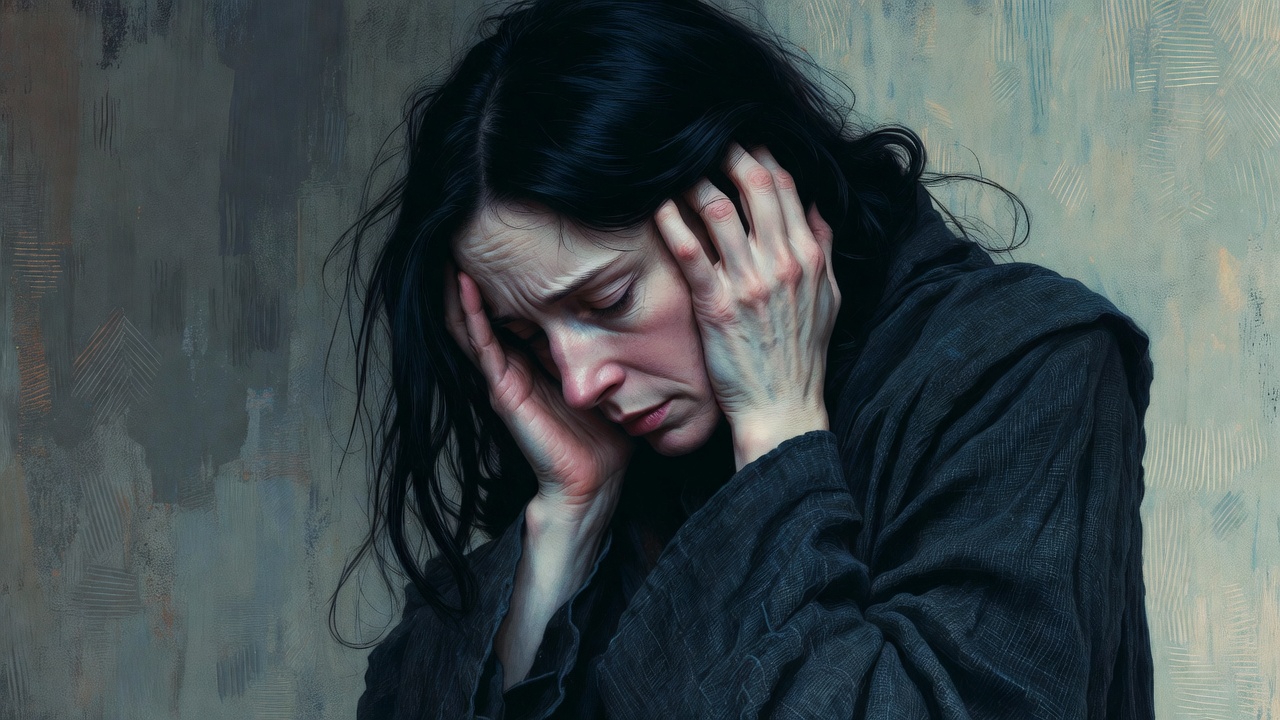
The Decision That Changed Everything
The night I decided to stay, I stood alone in the kitchen long after everyone had gone to sleep, staring at the dim reflection of myself in the dark window. The house was quiet except for the soft hum of the refrigerator and the distant rhythm of my children’s breathing down the hallway. My hands rested on the counter, but they felt numb, as if my body was slowly disconnecting from the woman I used to be. I remember thinking that if I walked out that door, I could still save myself. But if I stayed, I would slowly disappear.
I had already packed a small bag earlier that evening. Nothing dramatic. Just a few clothes, my phone charger, and the journal I hadn’t written in for years. I placed it carefully near the door, hidden behind a coat, as if part of me still believed I might grab it and go. My heart was racing, but my face remained calm. Years of emotional restraint had taught me how to keep everything neatly locked behind a composed expression. I had become very good at pretending.
The marriage hadn’t collapsed overnight. It had eroded slowly, quietly, invisibly, like water wearing away stone. There were no screaming matches, no obvious betrayals that I could point to. Just years of emotional neglect, misunderstandings left unresolved, and conversations that slowly stopped happening. We lived beside each other instead of with each other. The love that once filled our home had faded into something distant and obligatory, like a routine neither of us questioned anymore.
What hurt the most was the loneliness that lived inside our marriage. I could be sitting across from him at dinner, our children laughing between us, and still feel utterly alone. I stopped sharing my dreams because they were met with indifference. I stopped expressing my pain because it was inconvenient. I stopped asking for affection because rejection had begun to hurt more than silence. Slowly, I learned to shrink.
But the children changed everything.
Every time I imagined leaving, I saw their faces. I saw their confusion, their fear, their tiny hearts trying to understand why their family was breaking apart. I imagined weekends split between houses, holidays divided by awkward schedules, and bedtime stories replaced by lonely phone calls. I pictured school events where one parent sat alone, pretending everything was normal. I told myself that if I could endure the unhappiness, I could give them stability. And in that moment, stability felt more important than my own survival.
So I stayed.
I convinced myself that love for my children could fill the emptiness inside me. I told myself that sacrifice was noble, that suffering quietly made me strong, that good mothers endured without complaint. I repeated these beliefs until they became my reality. And for a while, I truly believed I was doing the right thing. I believed that staying was an act of love.
But I didn’t realize that every day I stayed, I was slowly losing pieces of myself.
I stopped laughing the way I used to. My laughter became softer, more cautious, as if I were afraid of taking up too much emotional space. I stopped dressing for myself and started choosing clothes that allowed me to blend into the background. I stopped dreaming of the life I once wanted because dreaming only reminded me of everything I had given up. My identity faded into my responsibilities, and soon I was known only as “mom” and “wife,” never as me.
The house became my world, and yet I felt invisible inside it.
Each morning, I woke up before everyone else, moving quietly through the kitchen, preparing lunches, ironing uniforms, and packing school bags. I made breakfast with care, cut fruit into perfect shapes, and tied shoelaces with gentle hands. I kissed foreheads and fixed messy hair. From the outside, I looked like the picture of devotion. But inside, I was hollow.
The days blurred together in a rhythm of obligations. School runs, grocery shopping, laundry, dinner, bedtime routines. I performed each task flawlessly, but my heart remained distant, like a guest observing someone else’s life. Sometimes I would catch my reflection in mirrors or windows and barely recognize the woman staring back. Her eyes looked tired, but deeper than that, they looked lost.
At night, when the house finally grew silent, I would lie awake next to someone who felt like a stranger, staring at the ceiling and wondering how I had ended up here. My mind replayed memories of the woman I used to be — ambitious, hopeful, alive. I remembered the dreams I once carried, the places I wanted to see, the passions I wanted to pursue. Those memories felt like stories from another lifetime.
There were moments when the weight became unbearable. Moments when I wanted to scream, to cry, to confess how broken I felt. But I swallowed those emotions, pushing them deep into my chest where they hardened into quiet despair. I told myself I didn’t have the right to fall apart. Not when my children depended on me. Not when their world needed stability more than my happiness.
So I stayed.
And in staying, I learned how to disappear without leaving.
The Slow Erosion of Identity
At first, the changes were subtle. So subtle that I barely noticed them happening. I told myself I was simply adjusting to motherhood, adapting to responsibility, growing into the role life had given me. Everyone said it was normal to feel tired, to feel stretched thin, to feel like parts of yourself had to be put on hold. They called it maturity. They called it sacrifice. They called it love. And so, I accepted the slow erosion of my identity as something noble.
But what no one warned me about was how easily putting yourself last becomes a habit, and how dangerous that habit can be.
My days revolved entirely around everyone else’s needs. I woke up already exhausted, knowing that before I could even think about myself, I had to make sure every detail of everyone else’s day was perfectly arranged. I remembered appointments, deadlines, school projects, and forgotten supplies. I carried mental checklists that never ended, constantly anticipating what might go wrong and how to prevent it. My mind never rested. It simply shifted from one worry to another, like a machine that had forgotten how to power down.
In the beginning, I still tried to hold onto pieces of who I was. I would read late at night, scribble short journal entries, or play music softly while folding laundry. These moments felt like small acts of rebellion, quiet attempts to remind myself that I still existed beyond my roles. But gradually, even those tiny rituals disappeared. Fatigue replaced curiosity. Obligation replaced desire. Survival replaced passion.
My conversations changed, too. I used to talk about dreams, ideas, emotions, and questions about life. Now, my words were practical, functional, and brief. I discussed grocery lists, school schedules, household repairs, and daily logistics. Even when I spoke about my feelings, I softened them, diluted them, and filtered them so they wouldn’t burden anyone. I learned how to present a version of myself that was easy to accept, easy to overlook, and easy to ignore.
And slowly, I became invisible — even to myself.
There were days when I stood in the shower, letting the water run over me, trying to remember what I liked, what made me feel alive, what used to bring me joy. But the answers felt distant, buried under years of compromise. I could list everyone else’s favorite foods, favorite colors, favorite movies. But when I tried to think of my own, my mind went blank. I had spent so long prioritizing others that I had forgotten how to prioritize myself.
I didn’t realize how deeply I was disappearing until one afternoon when my child asked me a simple question: “Mom, what do you like to do for fun?”
The question caught me off guard. I opened my mouth to answer, but no words came out. I stood there, frozen, heart pounding, searching my mind for something — anything — that felt true. But all I could think about were responsibilities. Cooking. Cleaning. Organizing. Worrying. Waiting. There was nothing left that belonged only to me.
I laughed awkwardly and changed the subject, but inside, something cracked.
That night, I cried silently into my pillow, overwhelmed by the realization that I had lost myself so completely that I no longer knew who I was. I mourned the woman I used to be, the girl who had once believed her life would be filled with adventure, meaning, and connection. I wondered when exactly she had vanished and whether she could ever be found again.
The loneliness grew heavier as the years passed.
I longed for emotional intimacy, for someone to truly see me, to notice my exhaustion, to ask how I was really doing. But those questions rarely came. When they did, I answered automatically: “I’m fine.” That phrase became my armor, my shield, my excuse to avoid confronting the truth. It was easier to pretend I was okay than to explain the depth of my emptiness.
I watched other people chase their dreams, change careers, travel, fall in love again, and rediscover themselves. Meanwhile, my life felt frozen in place, locked inside a role I hadn’t chosen but felt trapped in. I told myself I should be grateful. I had healthy children. I had a stable home. I had security. And yet, gratitude did not erase the quiet grief I carried for the life I never lived.
Sometimes, late at night, I imagined an alternate version of myself — the woman who had chosen to leave. I pictured her living in a small apartment filled with sunlight, surrounded by books, plants, and silence. I imagined her waking up without dread, breathing deeply, and finally feeling free. But those fantasies always ended the same way: with the image of my children standing in the doorway, their eyes filled with confusion and sadness.
And so, I stayed.
I stayed even as the weight inside me grew heavier.
I stayed even as my reflection looked increasingly unfamiliar.
I stayed, convincing myself that love meant endurance, and endurance meant disappearance.
But deep down, I knew something inside me was breaking.
And I feared that one day, I wouldn’t be able to hold myself together anymore.
Emotional Loneliness Inside a Full House
From the outside, our home looked warm, stable, and complete. There was always food on the table, clean clothes in the closets, and laughter echoing through the halls. Friends and relatives admired how “put together” our family seemed. They praised my dedication, my patience, my strength. They told me I was lucky. And sometimes, I almost believed them.
But what no one saw was how lonely I felt in a house that was never empty.
Loneliness doesn’t always come from being alone. Sometimes, it comes from being surrounded by people who don’t truly see you. Every day, I moved through familiar rooms, performing familiar routines, yet feeling like a ghost passing through someone else’s life. I existed to serve, to support, to sustain — but not to be understood.
My marriage had become a partnership built on logistics rather than connection. We communicated about bills, schedules, and responsibilities, but rarely about feelings. When I tried to open up, my words often fell into silence or indifference. Over time, I learned to keep my emotions tucked neatly away, convincing myself that expressing them only created tension.
There were evenings when we sat together on the couch, the television flickering between us, our bodies inches apart, yet emotionally worlds away. I would glance at his face, searching for familiarity, longing, or curiosity, but I found none. The space between us felt vast, filled with unspoken disappointments and unresolved hurts. In those moments, I felt more alone than I ever had in solitude.
I missed being seen.
Not admired. Not praised. Just seen.
Seen in my exhaustion. Seen in my sacrifices. Seen in my silent suffering.
But instead, I blended into the background, becoming a fixture of the household rather than a living, breathing individual. My presence was expected, relied upon, and taken for granted. No one questioned my strength because it had become my identity. I was the dependable one, the stable one, the one who never broke.
And so, I learned how to suffer quietly.
At night, after everyone had gone to sleep, I often wandered through the house, picking up toys, straightening cushions, and wiping down counters. These small, repetitive motions gave me something to focus on, something to anchor my racing thoughts. In the stillness, my emotions finally surfaced, heavy and relentless. I felt the ache of unmet needs, the grief of lost dreams, and the fear that my life would always look like this.
Some nights, I cried silently in the bathroom, pressing a towel against my mouth to stifle the sound. I was afraid of being heard, afraid of being asked questions I couldn’t answer, afraid of admitting the depth of my despair. I told myself that tears were a luxury I couldn’t afford, that breaking down would only make things worse.
I became an expert at emotional containment.
I smiled when I wanted to scream.
I nodded when I wanted to argue.
I agreed when I wanted to resist.
And slowly, resentment crept in.
I resented the way my needs were always secondary. I resented the assumption that I would handle everything. I resented the silence that filled our marriage. But most of all, I resented myself — for staying, for enduring, for choosing everyone else over me, day after day, year after year.
The resentment felt ugly, shameful, and forbidden. So I buried it deep, layering it beneath guilt and obligation. I reminded myself constantly that my children were my priority, that my discomfort was insignificant compared to their happiness. But no matter how hard I tried to suppress it, the bitterness lingered, simmering quietly beneath the surface.
There were moments when I fantasized about escaping. Not in dramatic ways, but in small, ordinary ones. Driving alone for hours with no destination. Sitting in a café, writing in a notebook without interruption. Renting a small room somewhere anonymous, where no one needed anything from me. These fantasies weren’t about abandoning my family. They were about rediscovering myself.
But each time I allowed myself to imagine such freedom, guilt followed close behind.
What kind of mother longs to be alone?
What kind of woman dreams of leaving her life behind?
The shame kept me trapped.
So I stayed in a state of emotional limbo — not fully alive, not completely broken. Just existing, waiting, enduring.
And then, something inside me began to shift.
The sadness that once came in waves became constant. The heaviness that used to fade in moments of distraction settled permanently in my chest. I started waking up already tired, my body aching with exhaustion that sleep could no longer fix. My patience thinned. My joy dulled. My hope dimmed.
I was burning out, slowly and quietly.
And no one noticed.
The Moment I Realized I Was Disappearing
There wasn’t one single dramatic event that made me realize I was disappearing. It happened in fragments, in quiet moments that stacked on top of each other until the truth became impossible to ignore. It happened in the pauses between conversations, in the silence after laughter faded, and in the exhaustion that clung to my bones no matter how much I rested.
The clearest moment came on an ordinary afternoon.
I was standing in the grocery store, staring at rows of cereal boxes, completely unable to decide which one to buy. My list was in my hand, my phone buzzing in my pocket with unanswered messages, and yet I felt paralyzed. My chest tightened, my breathing became shallow, and suddenly, tears blurred my vision. I didn’t understand why something so small felt so overwhelming. I stood there, frozen, while shoppers moved around me, their lives continuing normally as mine quietly unraveled.
That was the first time I wondered if something was truly wrong.
I rushed to my car, locked the doors, and cried until my body shook. I cried for the years I had swallowed my emotions. I cried for the dreams I had abandoned. I cried for the loneliness I carried in silence. And I cried because I no longer recognized myself.
I realized then that I had spent so long being everything for everyone else that there was nothing left for me.
From that day forward, I began to notice how absent I had become in my own life. I went through the motions automatically, detached from my surroundings, as though watching myself from a distance. My thoughts felt foggy. My reactions dulled. Even moments that should have brought joy felt muted, like watching a beautiful sunset through dirty glass.
There were times when my children laughed, and I smiled, but the happiness didn’t reach my heart. I felt guilty for that. Deeply guilty. I loved them more than anything, yet I couldn’t access the joy I knew I should feel. That emptiness frightened me. It made me question whether staying was truly protecting them or quietly harming us all.
The exhaustion became relentless.
Not the kind that fades after a good night’s sleep, but a soul-deep weariness that settled into every part of my body. My muscles ached. My head throbbed. My chest felt heavy, as if something invisible were pressing down on it. Each morning, getting out of bed required an act of will that grew harder every day.
I stopped looking forward to things.
Birthdays felt like obligations.
Holidays felt like performances.
Weekends felt like extended workdays.
Life lost its color, fading into dull shades of responsibility and endurance.
And yet, I kept telling myself that this was normal. That everyone felt this way. That motherhood and marriage were supposed to be exhausting. That I was being dramatic. That if I just tried harder, organized better, complained less, and sacrificed more, I would finally feel fulfilled.
But deep down, I knew I was lying to myself.
I wasn’t tired.
I was depleted.
There were moments when I caught myself fantasizing about disappearing entirely. Not in a frightening way, but in a longing-for-rest kind of way. I imagined being alone in a quiet room, free from noise, demands, and expectations. Just stillness. Just silence. Just peace. The fact that these fantasies felt comforting scared me.
I began to wonder if staying was slowly destroying me.
Still, I couldn’t bring myself to leave.
Every time the thought surfaced, guilt crushed it back down. I saw my children’s faces. I remembered their laughter, their small hands in mine, their sleepy hugs. I reminded myself that their sense of safety depended on consistency, on familiarity, on routine. I convinced myself that my suffering was a small price to pay for their stability.
So I endured.
But endurance without hope becomes despair.
And despair, when buried long enough, turns into something dangerous.
Something inside me was cracking, even if no one could see it.
And I knew I couldn’t keep living this way forever.
The Quiet Breakdown No One Saw
My breakdown did not come with screaming, collapsing, or dramatic gestures. It arrived quietly, slowly, and invisibly, settling into my life like a shadow that never left. There was no single moment when I fell apart. Instead, I unraveled in fragments, in silent ways that no one noticed and no one asked about.
It began with numbness.
The sadness that once came in waves slowly disappeared, replaced by something far more frightening — emptiness. I stopped crying because I no longer had the energy. I stopped feeling deeply because my heart seemed exhausted from carrying too much for too long. Even anger faded. Everything softened into a dull, constant ache, as if my emotions had shut down to protect me from further pain.
I moved through my days on autopilot.
I woke up. I cooked. I cleaned. I drove. I worked. I smiled. I listened. I responded.
But I wasn’t truly present.
My body showed up, but my soul remained distant.
There were moments when I stared at my reflection and felt like I was looking at a stranger. My eyes looked hollow, my smile forced, my posture heavy. I could see the weight of years pressing into my face, carving lines of exhaustion and quiet grief. And yet, no one commented. No one asked. No one noticed.
Or maybe they did, but didn’t know how to say anything.
The isolation deepened.
Even in crowded rooms, I felt alone. Even during family gatherings, laughter sounded distant, as if filtered through layers of glass. Conversations drifted around me while my mind wandered elsewhere, lost in thoughts I couldn’t escape. I nodded, smiled, and responded automatically, while inside I felt disconnected from everything and everyone.
At night, sleep became elusive.
My mind replayed regrets, fears, and unanswered questions. I wondered who I could have been. I questioned whether my sacrifices truly protected my children or merely taught them that love meant losing yourself. I worried about the example I was setting, about the message my silence was sending.
Some nights, I lay awake for hours, staring at the ceiling, feeling the crushing weight of a life that no longer felt like my own.
And then came the anxiety.
A constant tightness in my chest.
A persistent knot in my stomach.
A racing heartbeat for no obvious reason.
Ordinary tasks began to feel overwhelming. Simple decisions exhausted me. Unexpected changes sent me spiraling into panic. My body carried the stress my voice refused to express.
Still, I said nothing.
I smiled through it.
I functioned through it.
I endured through it.
Because I believed breaking down would make me weak.
And weakness felt like failure.
There were moments when I almost spoke. When the words sat trembling on my lips, waiting for permission to exist. But fear always silenced them. Fear of being misunderstood. Fear of being judged. Fear of being told I was ungrateful. Fear of disrupting the fragile balance I had spent years maintaining.
So I swallowed my pain.
And the more I swallowed, the heavier it became.
Until one day, something small finally broke me.
It was a simple comment. A careless remark. A harmless joke.
But it landed on a heart already cracked open.
And suddenly, I was crying in the bathroom, shaking, gasping for breath, overwhelmed by a flood of emotions I had suppressed for years. I slid down the wall and sat on the cold floor, hugging my knees, trying to make myself smaller, quieter, invisible.
In that moment, I realized how dangerously close I was to losing myself completely.
Not just emotionally.
But entirely.
And for the first time, I wondered if staying for my children might eventually leave them without the mother they needed.
That realization terrified me more than the idea of leaving ever had.
Learning That Staying Isn’t Always Love
For a long time, I believed staying was the purest form of love.
I told myself that enduring unhappiness was noble. That sacrificing my identity was proof of devotion. That swallowing pain was what good mothers and good wives did. I wrapped my suffering in responsibility and called it strength. I convinced myself that if I could just hold on a little longer, everything would somehow become easier.
But it didn’t.
It only became heavier.
What I eventually learned — slowly, painfully — was that staying does not always mean protecting. Sometimes, staying means slowly teaching your children that love requires self-destruction. That stability must be built on silence. That emotional needs should be buried instead of honored.
That realization shattered me.
I started to notice the subtle ways my emptiness leaked into my parenting. My patience was thinner. My laughter less frequent. My energy drained. I was physically present, but emotionally exhausted. I began to fear that my children were learning what love looked like by watching me disappear.
And I didn’t want that for them.
I didn’t want my daughters to believe they had to suffer to be worthy of love.
I didn’t want my sons to believe emotional neglect was normal.
I didn’t want sacrifice to be the only language of devotion they ever understood.
For the first time, I allowed myself to question the story I had been telling for years: that staying was always better than leaving.
What if staying was quietly breaking all of us?
What if my children deserved a mother who was whole, not hollow?
What if the greatest act of love wasn’t endurance — but honesty?
These questions haunted me.
They forced me to confront uncomfortable truths about my marriage, my choices, and my fears. They pushed me to look beyond guilt and obligation and examine what kind of life I truly wanted to model for my children.
I realized that love should not require self-erasure.
That commitment should not demand emotional starvation.
That family should not be built on silent suffering.
And yet, knowing these truths didn’t instantly grant me courage.
Fear still wrapped tightly around my heart.
Fear of disrupting their world.
Fear of being judged.
Fear of financial instability.
Fear of loneliness.
Fear of regret.
Fear of making the wrong decision.
But beneath all of that fear was a quiet, persistent longing — to breathe again. To feel alive. To exist as more than a function. To rediscover the woman I had lost.
I began to understand that choosing myself did not mean abandoning my children. It meant choosing to show up for them as a healthier, more authentic version of myself. It meant modeling self-respect instead of silent martyrdom. It meant teaching them that love includes boundaries, honesty, and emotional safety.
Slowly, carefully, I started taking small steps toward reclaiming myself.
I wrote again.
I walked alone.
I sat in silence without guilt.
I allowed myself to rest.
I allowed myself to dream.
And in those quiet moments, I began to feel pieces of my old self stirring back to life.
The journey wasn’t easy.
It was filled with doubt, grief, and fear.
But it was also filled with relief.
Relief at finally acknowledging my pain.
Relief at giving my emotions space to exist.
Relief at no longer pretending I was okay when I wasn’t.
I learned that staying for the kids is not always the same as loving them.
Sometimes, loving them means teaching them that their mother matters too.
And perhaps the hardest truth of all was this:
I didn’t lose myself because I stayed.
I lost myself because I believed I wasn’t allowed to exist beyond everyone else’s needs.
Now, I am learning to exist again.
Slowly.
Quietly.
Bravely.
❤️ Final Reflection
If you are staying in a life that is slowly draining you, know this:
Your pain is real.
Your exhaustion is valid.
Your identity matters.
And you deserve a life that allows you to breathe.