
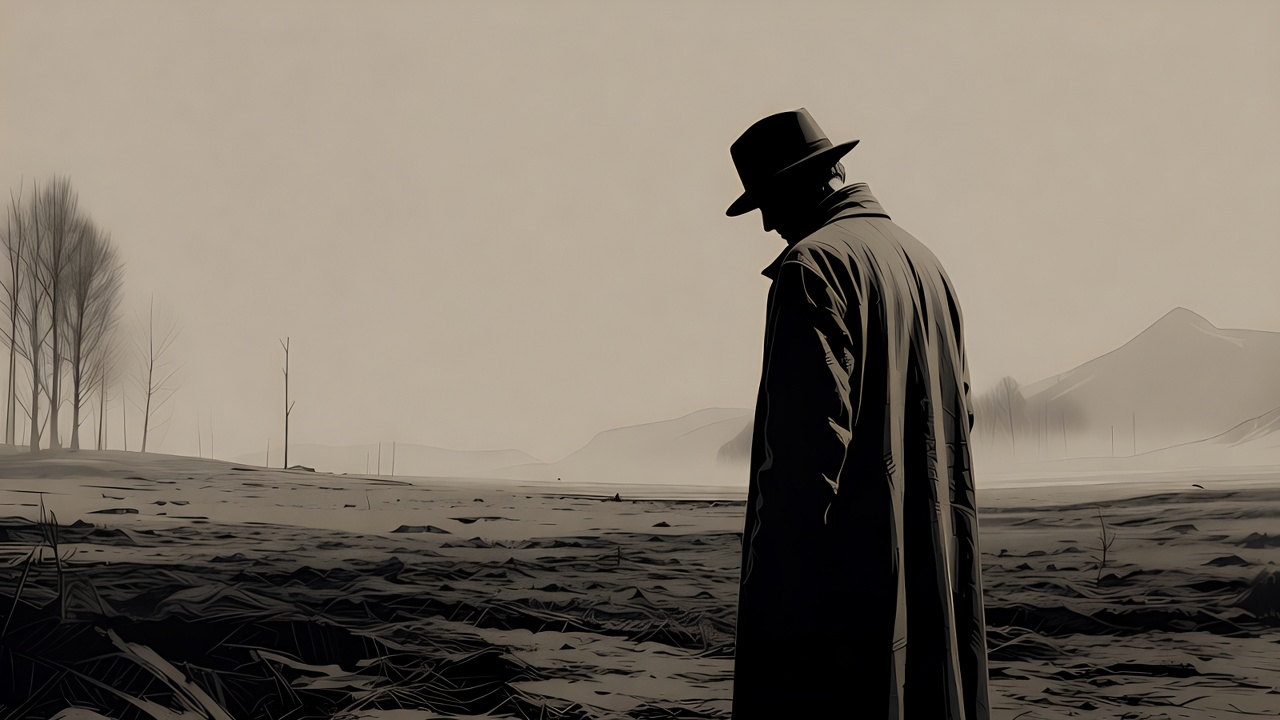
The Exit That Never Ended
The moment I walked away without saying goodbye, I didn’t realize I was creating a memory that would follow me for the rest of my life. At the time, it felt necessary, urgent, even merciful. I told myself that silence was kinder than confrontation, that distance was safer than honesty, that leaving quietly would spare us both unnecessary pain. I believed I was protecting myself, preserving my dignity, avoiding an emotional collapse I wasn’t strong enough to face. But I underestimated the weight of unfinished moments, the way unresolved endings settle deep inside your chest and refuse to loosen their grip. Because when you leave without closure, you don’t truly leave — a part of you stays behind, trapped in the space where goodbye should have lived.
I still remember that day with unsettling clarity. The way the air felt heavier than usual. The way every sound seemed louder, sharper, more demanding of attention. My body moved automatically, guided by decision rather than certainty, by fear rather than confidence. Each step away felt both freeing and unbearable, as though I were escaping and surrendering at the same time. I wanted to turn back. I wanted to speak. I wanted to explain everything I couldn’t find the words for. But I didn’t. Instead, I carried my silence like armor, convincing myself that strength meant leaving without looking back, even as my heart shattered quietly behind me.
At first, the distance felt like relief. The absence of confrontation gave me space to breathe, to think, to regain control over emotions that had begun to overwhelm me. I told myself that endings didn’t need ceremony, that goodbyes were dramatic and unnecessary, that life would naturally move forward without them. I filled my days with distraction, busyness, and noise, hoping that movement would drown out memory. And for a while, it worked. The ache dulled. The sharp edges softened. The silence seemed manageable. But what I didn’t understand then was that unresolved emotion does not disappear — it simply waits, patient and persistent, until the world grows quiet enough for it to speak.
Nights became the hardest. In the stillness, when the world slowed and distractions faded, memories returned uninvited. Conversations we never finished. Words I never spoke. Questions that remained unanswered. I replayed moments endlessly, searching for alternate endings, better timing, braver choices. I imagined what I should have said, how I should have said it, how differently things might have unfolded if I had stayed just a little longer. The weight of those imagined goodbyes pressed heavily against my chest, stealing sleep and peace in equal measure. Regret has a way of whispering the loudest in silence.
What haunted me most was not the leaving, but the absence of explanation. I disappeared without clarity, leaving behind confusion, unanswered questions, and emotional debris I never cleaned up. I wondered what stories they told themselves in my absence. Did they feel abandoned? Betrayed? Relieved? Forgotten? The thought that I had caused pain without even offering understanding unsettled me deeply. I carried the guilt quietly, convinced that if I acknowledged it too openly, it would crush me. So I learned to coexist with it, letting it shape my thoughts, my relationships, and my sense of self in subtle but profound ways.
Over time, the unfinished goodbye began to influence how I connected with others. I became cautious, guarded, hesitant to form attachments that might one day require another painful departure. I struggled to commit emotionally, always holding back a piece of myself in preparation for escape. Leaving had taught me how to survive, but it had also taught me how to retreat. Every relationship carried the shadow of that first unresolved ending, reminding me of the cost of silence and the vulnerability of connection. I wanted closeness, yet feared the responsibility that came with it.
There were moments when I considered reaching out, when the urge to finally explain overwhelmed my hesitation. I drafted messages I never sent, rehearsed conversations that never happened, imagined reunions that never materialized. Each attempt dissolved under the weight of uncertainty. Too much time had passed. Too many emotions had settled. Too many assumptions had formed. I feared reopening wounds that had already scarred, feared disrupting whatever peace had been rebuilt in my absence. So once again, I chose silence — not because it felt right, but because it felt safer than risking rejection, anger, or indifference.
As the years passed, the memory of leaving without goodbye became a quiet companion, woven into the fabric of my daily life. It surfaced in unexpected moments — in songs, in familiar places, in fleeting expressions on strangers’ faces. Each reminder reopened a small ache, a subtle reminder of the ending I never honored. I learned to carry it with grace, to accept its presence as part of my story. But acceptance did not mean peace. It simply meant adaptation. The wound no longer bled, but it never fully healed.
The truth is, I didn’t just leave them — I left a version of myself behind. A younger, softer, more hopeful self who believed that endings could be postponed without consequence. That version of me still lingers in the past, suspended in the moment before departure, waiting for closure that never came. And perhaps that is why the memory continues to haunt me — because some part of me remains unfinished, unresolved, quietly longing for the goodbye I never allowed myself to give.
The Words I Carried But Never Spoke
There were so many things I wanted to say, so many thoughts and emotions that crowded my chest, desperate for release. Every unsent word became a weight I carried silently, pressing harder with each passing year. I rehearsed those conversations in my mind, shaping sentences, refining explanations, imagining responses, and crafting the perfect moment that never came. In those imagined exchanges, I was brave. I was honest. I was vulnerable. I said everything I had buried. But in reality, fear always intervened, convincing me that silence was safer than truth, that distance was easier than emotional exposure.
Some of the words were simple — apologies I owed, gratitude I never expressed, affection I withheld. Others were complicated, tangled in regret, confusion, and unresolved emotion. I wanted to explain the exhaustion that led me to leave, the fear that overwhelmed me, the sense of being trapped between expectation and self-preservation. I wanted them to understand that my departure was not a rejection of them, but an attempt to save myself. Yet I worried that any explanation would sound like excuse, that my pain would seem insignificant compared to the hurt I had caused. And so I remained silent, allowing misunderstanding to grow where clarity should have lived.
The longer I held onto those unsaid words, the heavier they became. They surfaced in unexpected moments, disrupting otherwise ordinary days. A familiar scent, a song on the radio, a passing phrase that mirrored something we once shared — all of it triggered emotional echoes that caught me off guard. In those moments, the distance between past and present collapsed, and I found myself reliving conversations that never happened, mourning connections that were never properly laid to rest. It felt as though time itself refused to move forward, tethered to the unresolved truth I continued to avoid.
I often wondered how different things might have been if I had spoken. Would understanding have softened the pain? Would closure have eased the longing? Would forgiveness have been possible? These questions circled endlessly, offering no resolution, only further uncertainty. And yet, despite knowing the cost of silence, I could not bring myself to break it. The idea of reopening old wounds, of disturbing whatever fragile peace might have formed, filled me with dread. I feared that my words would arrive too late, carrying more weight than healing.
Sometimes, I imagined them hearing my side of the story, their expression shifting from confusion to understanding. In those fantasies, our shared history was honored, our connection validated, our ending transformed into something gentler. But reality rarely aligns with imagination. Too much time had passed. Lives had changed. New narratives had formed in the absence of my voice. I worried that my sudden honesty would feel intrusive, disruptive, or selfish. And so, I kept my words locked inside, believing that restraint was the kinder choice.
Yet kindness toward others often meant cruelty toward myself. Each unsaid word added another layer of regret, another reason to revisit the past with aching nostalgia. I became my own harshest judge, replaying the moment of departure with relentless scrutiny. Why didn’t I pause? Why didn’t I explain? Why didn’t I stay long enough to offer closure? These questions followed me everywhere, shaping my self-perception and fueling a quiet sense of shame. I carried the burden of unfinished communication like a secret punishment, convinced that I deserved the discomfort for my silence.
Over time, those unsaid words began to shape how I communicated in new relationships. I became cautious, hesitant to speak before carefully weighing the potential consequences. I learned to suppress my impulses, to filter my emotions, to avoid vulnerability whenever possible. Leaving without explanation had taught me the power of silence, but it had also taught me its danger. I struggled to find a balance between honesty and self-protection, between openness and emotional safety. Each interaction became a careful negotiation, guided by the memory of words that had once gone unspoken.
The truth is, silence rarely spares anyone. It simply delays the pain, allowing it to grow quietly in the dark. The words I never spoke did not fade with time; they matured, gaining depth and weight as my understanding of the situation evolved. What once felt confusing became clearer. What once felt overwhelming became manageable. With hindsight, I saw how honesty, though uncomfortable, might have offered healing rather than harm. But insight arrived too late, long after the moment had passed.
Still, those words remain with me, echoing softly in the background of my life. They surface in reflective moments, in quiet walks, in late-night thoughts, reminding me of the complexity of human connection and the fragility of timing. They teach me, even now, about courage, compassion, and accountability. And though I may never speak them aloud, they continue to shape who I am becoming — more mindful, more intentional, more aware of the power each word carries.
Perhaps the greatest lesson they offer is this: silence is never neutral. It carries meaning, intention, and consequence. And every time I choose to speak honestly now, I do so with a deeper appreciation for the cost of unspoken truth. Because I know firsthand how heavy words can become when they are never allowed to breathe.
The Guilt That Followed Me Everywhere
Guilt has a way of attaching itself to everything you do, quietly reshaping your days, your thoughts, and your sense of self. After I left without saying goodbye, it became my constant companion, walking beside me through every ordinary moment, whispering reminders of what I had done and what I had failed to do. It did not shout or accuse loudly. Instead, it lingered softly, patiently, waiting for moments of stillness to make itself known. In crowded rooms, it stood just behind my smile. In quiet spaces, it sat heavily on my chest. No matter where I went, it followed, shaping my experiences with an undercurrent of regret I could never fully escape.
At first, I tried to outrun it. I filled my schedule, surrounded myself with noise, and chased distractions that kept my mind occupied. I believed that if I stayed busy enough, the guilt would loosen its grip, allowing me to move forward unburdened. But guilt does not fade with movement — it deepens in silence and grows in reflection. Every pause became dangerous. Every quiet moment opened the door for memory. I would suddenly find myself replaying that final day, examining each detail, searching for the moment where I could have chosen differently. And in those reflections, the weight of my decision pressed heavier than ever.
The guilt manifested in subtle ways, influencing how I treated others and myself. I became excessively accommodating, eager to please, quick to apologize, desperate to compensate for a wrong I could never fully undo. I carried a persistent sense that I owed the world something — kindness, patience, sacrifice — as if good behavior might somehow balance the emotional debt I felt. But no amount of generosity could erase the unresolved ending I had created. The ledger in my mind remained stubbornly unbalanced, reminding me that some debts cannot be repaid through effort alone.
It seeped into my self-worth, altering how I saw myself. I began to define my character through that single moment of departure, allowing it to overshadow years of kindness, growth, and resilience. One choice became the lens through which I judged my entire identity. I labeled myself selfish, cowardly, weak — words that echoed loudly in moments of vulnerability. The complexity of my circumstances faded, replaced by a harsh simplicity that reduced my humanity to a single failure. And in doing so, I denied myself the compassion I so freely offered others.
Even moments of happiness felt compromised. Joy arrived cautiously, shadowed by the belief that I did not fully deserve it. Laughter felt lighter than it should, accomplishments less satisfying, peace fleeting and fragile. Guilt hovered nearby, ready to remind me of unresolved pain whenever I relaxed my guard. It became difficult to fully inhabit the present, as though part of me remained anchored to the past, unable to let go. I lived in a constant state of emotional tension, pulled between the desire to move forward and the fear of forgetting.
The hardest part was the uncertainty. Not knowing how my absence had affected them allowed my imagination to fill in the gaps with worst-case scenarios. I pictured confusion, heartbreak, abandonment, and resentment, each image reinforcing my sense of wrongdoing. Without closure, I had no way of measuring the true impact of my silence, leaving me trapped in endless speculation. And in that uncertainty, guilt flourished, feeding on unanswered questions and unresolved emotion. I carried not only my own pain, but the imagined pain of another, doubling the weight on my heart.
There were moments when I considered reaching out, driven by a desperate desire to apologize, to explain, to seek forgiveness. But guilt complicated those impulses, twisting them into fear. What if I reopened wounds that had begun to heal? What if my message disrupted their peace, forcing them to relive pain they had already worked through? What if my apology served only to ease my conscience rather than truly help them? These questions paralyzed me, turning good intentions into inaction. And once again, I chose silence, even as it deepened the very guilt I hoped to escape.
Over time, I learned that guilt, when left unexamined, becomes a form of self-punishment. It convinces you that suffering is necessary, that peace must be earned through enduring regret. I lived with this belief for years, accepting emotional discomfort as the price of my decision. But endurance did not bring healing. It only prolonged my pain. I remained stuck in a cycle of self-blame, unable to fully forgive myself or release the past.
Slowly, though, I began to understand that guilt, while painful, was also evidence of care. It existed because I valued connection, because I recognized the importance of kindness, because I understood the impact of my actions. In that realization, I found a small measure of grace. Perhaps my guilt did not make me irredeemable. Perhaps it made me human. And in acknowledging that humanity, I opened the door to a gentler relationship with myself — one that allowed for accountability without endless punishment, reflection without self-destruction, and remorse without lifelong suffering.
When Memory Became My Punishment
Memory has a cruel way of resurfacing when you least expect it. Long after I believed I had buried the past, it found ways to return — uninvited, unfiltered, and relentless. A familiar song drifting through a crowded room. A scent that resembled a moment we once shared. A phrase spoken by a stranger that mirrored something they used to say. Each trigger opened a door I had tried desperately to keep closed, flooding my present with echoes of what I left behind. And in those moments, memory did not comfort — it punished. It reminded me of everything unfinished, unresolved, and unsaid, pulling me backward even as I tried to move forward.
Some memories arrived softly, wrapping themselves around me like gentle nostalgia before tightening into pain. Others struck without warning, sharp and overwhelming, stealing my breath and clarity. I would suddenly find myself standing still, disconnected from my surroundings, lost in scenes that replayed with devastating precision. Their expressions. Their voice. The environment where everything changed. My heart would race as if the moment were happening again, as if time itself had folded inward. No matter how far I traveled or how much time passed, the past always knew how to find me.
The hardest memories were the ordinary ones. Not the dramatic fights or emotional confrontations, but the small, tender moments that once felt insignificant. The way they laughed. The habits I memorized without realizing. The shared silences that spoke louder than words. These fragments resurfaced unexpectedly, turning mundane situations into emotional minefields. A familiar gesture from a stranger could send me spiraling. A casual conversation could awaken a longing I had carefully buried. And each time, I was reminded that what hurt most wasn’t just what ended — it was what once existed so naturally.
At night, memory became relentless. When the world quieted, my mind grew louder, replaying scenes I wished I could rewrite. I dissected my final moments there, searching for alternative endings, braver choices, kinder departures. I imagined myself staying, speaking, explaining, offering closure instead of confusion. These imagined versions haunted me, highlighting the distance between who I was and who I wished I had been. Sleep came reluctantly, and when it did, it was often fractured, interrupted by dreams filled with familiar faces and unresolved emotion.
Memory also reshaped how I viewed the present. New experiences were filtered through the lens of what I had lost, making joy feel fragile and temporary. Every good moment carried an unspoken comparison, a quiet awareness that happiness could vanish without warning. I became cautious, emotionally guarded, reluctant to fully invest in new beginnings. I feared creating bonds that might someday require another painful ending. And so, memory did not simply punish me for the past — it limited my ability to fully inhabit the present.
I learned that unresolved endings do not fade; they linger, demanding acknowledgment. The absence of closure left a vacuum my mind desperately tried to fill. Without final conversations or mutual understanding, I was left with speculation, interpretation, and imagined responses. Each possibility carried its own emotional weight, compounding my uncertainty and regret. I wondered if they hated me, missed me, resented me, or had forgotten me entirely. Each unanswered question deepened the ache, reinforcing the power memory held over my emotional world.
There were moments when I resented my own mind for its persistence. I wanted freedom from the past, a clean emotional slate, the ability to exist without constant reminders. But memory refused to comply. It insisted on teaching, on confronting, on revealing uncomfortable truths about love, responsibility, and consequence. And slowly, I began to understand that its purpose was not cruelty, but clarity. It forced me to face the impact of my actions, to recognize the depth of my emotional connections, and to accept the permanence of certain choices.
Yet, understanding did not ease the pain. If anything, it sharpened it. Awareness deepened regret, transforming vague discomfort into vivid accountability. I could no longer hide behind confusion or emotional distance. I had to acknowledge that my silence had shaped not only my life, but theirs as well. That realization carried a heaviness unlike anything I had known, settling deep in my chest, reshaping my understanding of responsibility and emotional consequence.
And so, memory became both my teacher and my tormentor. It reminded me of love I had once known, courage I had lacked, and endings I had mishandled. It followed me through years of growth and change, whispering reminders of unfinished business and unresolved emotion. But within its punishment, there was also a quiet invitation — to reflect, to learn, to forgive, and eventually, to heal.
By the time the sun began to dip behind the buildings, the weight of everything I had avoided finally settled into my chest. The day had passed in a blur of routine—emails, tasks, conversations that felt hollow—but beneath it all, there was a constant echo: I left without saying goodbye. No matter how much I tried to stay busy, the thought followed me, persistent and heavy, like a shadow that stretched longer as the light faded.
There are moments when I replay that day in slow motion, wishing I could pause it, rewind it, and choose differently. I imagine myself standing at the doorway just a few seconds longer, turning back, meeting their eyes, and saying the words I swallowed. Not dramatic words. Not perfect words. Just something real. Something honest. Something that would have let them know they mattered. Something that would have let me know I had tried.
Instead, I walked away, telling myself I would fix it later. That there would be time. That life would naturally circle back and give me another chance. But time is not a promise. It is a fragile, unpredictable gift, and I treated it like something endless. Now, every memory feels like a reminder of how carelessly I assumed tomorrow would always be waiting.
What hurts the most is not just the absence of closure, but the realization that silence can be louder than words. By not saying goodbye, I left questions behind. I left uncertainty. I left room for misunderstandings that can never be corrected. And even if they have found their own peace, I still carry the echo of what I failed to say, repeating itself in the quiet moments when nothing else can distract me.
Sometimes, in the middle of the night, I imagine what they might have thought as I disappeared. Did they feel dismissed? Forgotten? Unimportant? The idea that my silence could have caused even a fraction of that pain is something I struggle to forgive myself for. Because leaving without saying goodbye wasn’t just about avoidance—it was about fear. Fear of emotion. Fear of vulnerability. Fear of facing what I knew would hurt.
And yet, that fear ended up hurting far more than honesty ever could have. What I thought was self-protection turned into a lifelong burden. A single unfinished moment that continues to unfold in my mind, day after day, reminding me that some choices don’t fade with time. They grow roots. They settle deep. And they shape the way we carry ourselves through the rest of our lives.
If there is one truth I have learned from all of this, it is that goodbyes matter. Not because they erase pain, but because they honor connection. They acknowledge that something meaningful existed. They give both people a place to stand before stepping into separate futures. And without them, we are left wandering through memories, searching for endings that never came.
Over time, I’ve learned to sit with the discomfort instead of running from it, even when it feels unbearable. I let the memories surface, not to punish myself, but to understand what they are trying to teach me. Each recollection carries a quiet lesson about presence, courage, and the cost of silence. And though the regret still aches, it has slowly reshaped the way I approach every relationship that followed. I listen more carefully now. I linger longer. I say the things that once felt too heavy, too awkward, or too emotional to speak aloud.
Because I know how it feels to live with unsaid words, and I never want to carry that kind of weight again. I have learned that closure does not always come from perfect timing or perfect circumstances, but from the willingness to show up honestly, even when it is uncomfortable. It comes from choosing connection over pride, vulnerability over avoidance, and truth over temporary peace. And in doing so, I have discovered a deeper appreciation for every moment that still remains, fragile and fleeting.
If I could speak to my younger self, I would tell them that goodbyes are not endings, but acknowledgments. They are a way of honoring what was shared, even if it cannot continue. They are proof that something mattered enough to deserve a final moment of recognition. And though I can never rewrite that day, I carry its lesson forward, weaving it into every conversation, every farewell, and every quiet pause between words. Because sometimes, the smallest sentences we speak become the ones that stay with us forever.