
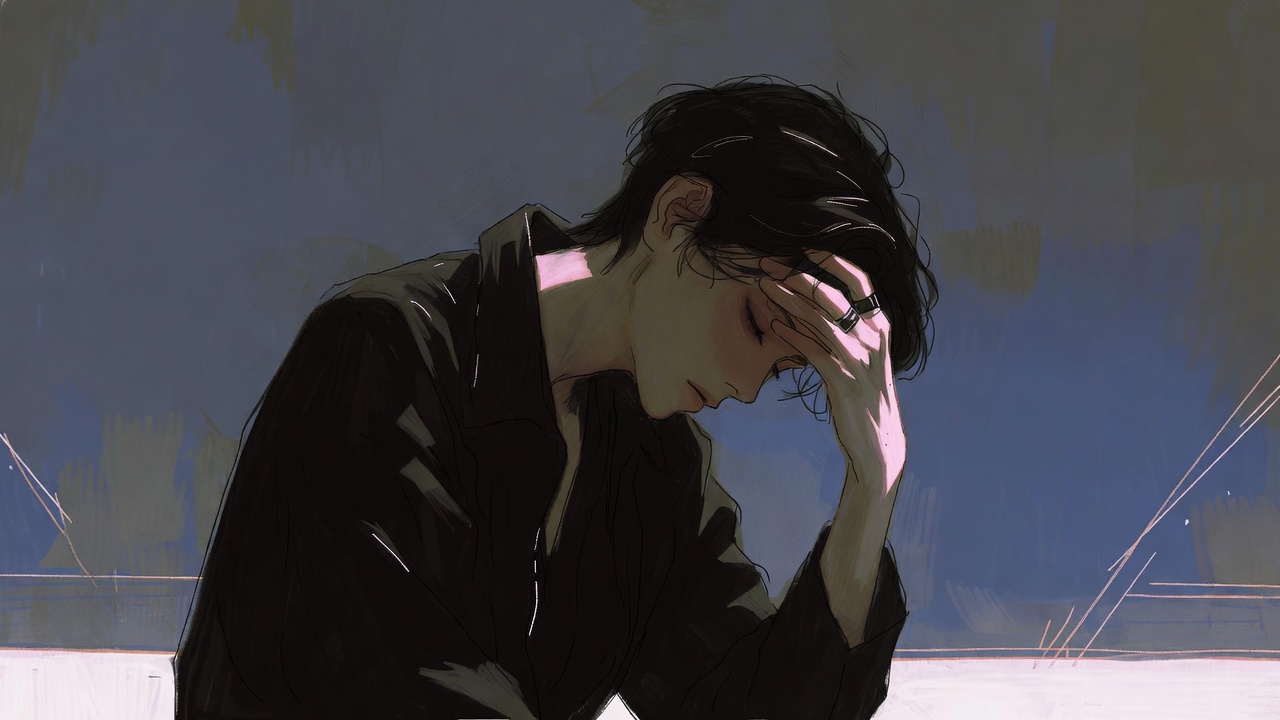
Loving Someone Who Never Truly Saw Me
I didn’t realize I was giving away my best years while it was happening. At the time, it felt like commitment. Like loyalty. Like love. I believed that staying, supporting, and enduring were proof of devotion. I believed that if I poured enough of myself into us, eventually, I would be seen, valued, and cherished. I told myself that love meant patience, that real connection took time, and that sacrifice was simply part of the journey.
So I waited.
I waited through the missed conversations, the forgotten dates, the emotional distance, and the constant feeling of being an afterthought. I waited through moments where my voice was ignored, my presence overlooked, and my needs dismissed. I waited because I believed in potential. I believed in promises. I believed in the idea of us more than the reality of what we actually were.
In the beginning, I was hopeful. I was warm. I was attentive. I noticed the smallest details — favorite meals, preferred moods, subtle changes in tone. I learned how to anticipate needs before they were spoken. I adjusted myself to fit into his world, slowly reshaping my life around his comfort, his schedule, and his priorities. I convinced myself that love meant flexibility, that compromise was beautiful, and that understanding required selflessness.
But the more I gave, the less I seemed to exist.
I became the one who remembered everything while being remembered for nothing. I held space for his stress, his ambitions, his disappointments, and his exhaustion, while quietly carrying my own. I listened deeply, offered reassurance, and provided emotional safety. Yet when I needed the same, the silence was deafening. My feelings were brushed aside, minimized, or postponed for later — a later that never came.
And still, I stayed.
Because I thought love meant endurance.
Because I thought loyalty meant patience.
Because I thought that one day, he would finally look at me and see everything I had given.
But years have a way of slipping past unnoticed.
One year became two. Two became five. Five became nearly a decade. And somewhere along the way, I lost track of time. I stopped measuring life by joy and started measuring it by survival. My days became cycles of effort, emotional labor, and quiet disappointment. I learned to celebrate small crumbs of attention as if they were grand gestures, grateful for moments that should have been basic.
I adjusted my expectations downward so often that I barely recognized them anymore.
Birthdays passed with little acknowledgment. Anniversaries felt like obligations rather than celebrations. Conversations became functional rather than intimate. I spoke, but rarely felt heard. I existed beside him, not with him. And the loneliness of being unseen by the person you love most is heavier than solitude.
Some nights, I lay awake beside him, staring at the ceiling, wondering how I could feel so invisible while lying so close. His breathing steady. Mine restless. Our bodies inches apart, our hearts worlds away. In those quiet hours, I replayed conversations I wished we had, confessions I longed to share, emotions I kept swallowing. But the fear of being dismissed kept my lips sealed.
I became an expert at emotional restraint.
I smiled when I felt empty.
I agreed when I wanted to protest.
I adjusted when I longed to stand still.
And slowly, my identity blurred into the background of his life.
Friends would comment on my devotion. Family would praise my patience. Outsiders admired my commitment. They saw strength, resilience, and loyalty. What they didn’t see was how tired I was. How unseen I felt. How much of myself I had already lost.
Because giving your best years to someone who barely notices doesn’t happen in dramatic moments.
It happens in quiet compromises.
In postponed dreams.
In swallowed words.
In the gradual shrinking of your spirit.
And by the time you realize what’s happening, you’ve already given away more than you know how to reclaim.
Slowly Becoming Invisible
At first, I told myself I was imagining it.
I convinced myself that everyone feels overlooked sometimes. That relationships naturally shift. That emotional distance was just a phase. I blamed stress, work, exhaustion, timing — anything but the truth that was quietly forming inside my chest. I didn’t want to accept that I was slowly becoming invisible to the person I loved most.
So I tried harder.
I became more attentive, more patient, more understanding. I softened my tone. I chose my words carefully. I learned when to speak and when to stay silent. I adjusted my moods to fit his comfort. I made myself smaller in moments when I longed to be held bigger. I believed that if I could just become easier to love, I would finally be loved properly.
But the more I gave, the less I seemed to matter.
Conversations became one-sided. My stories were met with distraction. My emotions were met with indifference. When I spoke about my fears, they were brushed aside. When I shared my dreams, they were met with polite nods. When I expressed my pain, it was minimized, dismissed, or misunderstood. Eventually, I stopped trying to explain myself at all.
It hurt less to be quiet than to be unheard.
I started noticing the way his attention drifted elsewhere. His phone held more importance than my voice. His work received more emotional energy than our relationship. His ambitions took precedence over our connection. I became something familiar, something expected, something taken for granted.
And familiarity, I learned, can sometimes feel like invisibility.
I began to fade in subtle ways.
I laughed less.
I spoke less.
I asked for less.
I wanted less.
Not because I needed less, but because wanting more had become too painful.
Every time I hoped for affection, understanding, or reassurance, disappointment followed. So I learned to lower my expectations until they were barely above nothing. I taught myself not to need, not to want, not to crave. I convinced myself that independence was strength, that emotional self-sufficiency was maturity.
But deep down, I was starving.
Starving for connection.
Starving for tenderness.
Starving for acknowledgment.
And no amount of logic could silence that hunger.
There were moments when I caught my reflection and barely recognized myself. My eyes looked dull. My posture slouched. My smile felt forced. I had once been vibrant, expressive, full of curiosity and warmth. Now, I was cautious, reserved, and guarded. The transformation frightened me.
I wondered when I had stopped being myself.
I wondered when I had started living for someone else’s comfort instead of my own fulfillment.
I wondered if this was what love was supposed to feel like.
The loneliness grew heavier because it existed inside intimacy. Being alone is one kind of pain. Being unseen by someone you love is another entirely. It makes you question your worth, your desirability, your value. It makes you shrink in ways you don’t even notice until you are almost gone.
Some nights, I lay awake replaying our early days. The laughter. The excitement. The way he once looked at me as if I mattered. I searched those memories desperately, trying to understand where we had gone wrong. I wondered if I had changed too much, if I had lost the parts of myself that once drew him in.
But the truth was simpler and harder to accept.
I had been giving endlessly to someone who barely noticed.
And I was disappearing in the process.
The Weight of Unreturned Love
There is a particular kind of heartbreak that comes from loving someone who does not love you back in the same way. It is not loud or dramatic. It does not explode. Instead, it settles quietly into your chest, heavy and constant, like a stone you carry everywhere. Over time, that weight begins to shape you. It bends your posture. It alters your breathing. It changes the way you see yourself.
I carried that weight for years.
I loved deeply, openly, and sincerely. I showed it through small gestures, careful attention, emotional availability, and constant presence. I remembered details. I anticipated needs. I celebrated achievements. I absorbed stress. I offered comfort. I made space. I made time. I made sacrifices. And I did it willingly, believing that love was something you nurtured patiently, something you grew through effort and understanding.
But love cannot survive on effort alone.
No matter how much I gave, the connection never deepened. The emotional distance remained. My affection was met with politeness. My vulnerability with awkward silence. My devotion with indifference. Over time, the imbalance became impossible to ignore. I was pouring into a cup that had no bottom, and every drop disappeared without trace.
That realization hurt more than rejection ever could.
Because rejection is clear.
But emotional neglect is confusing.
It makes you question your worth. It makes you doubt your perception. It makes you wonder if you are asking for too much, expecting too much, needing too much. It blurs the line between reality and self-blame. And slowly, painfully, you begin to turn inward, searching for flaws within yourself.
I wondered if I was too emotional.
Too sensitive.
Too demanding.
Too complicated.
Too much.
And in those doubts, I began to shrink.
I softened my voice.
I simplified my feelings.
I edited my thoughts.
I minimized my needs.
I tried to become easier to love.
But the more I compressed myself, the emptier I felt.
There were nights when I lay beside him, staring at the ceiling, my heart aching with words I could not release. I wanted to ask why I wasn’t enough. Why my presence didn’t spark curiosity. Why my love didn’t inspire tenderness. Why I felt invisible to the person who meant the most to me.
But fear held me back.
Fear of hearing the truth.
Fear of confirming what I already suspected.
Fear of discovering that I had given my best years to someone who simply did not see me.
So I stayed silent.
And in that silence, resentment slowly took root.
Not loud resentment. Not angry resentment.
But a quiet bitterness that crept into my thoughts and softened my spirit.
I began to feel tired all the time. Not just physically, but emotionally. The constant effort of loving alone drained me. The constant hope followed by disappointment eroded my optimism. I felt like I was running on emotional fumes, surviving on memories of what we once were and fantasies of what we might become.
I watched other couples laugh together, touch casually, and communicate effortlessly, and something inside me twisted painfully. I wondered what it felt like to be truly cherished. To be chosen. To be desired. To be emotionally safe.
I realized that I had not felt those things in a very long time.
And yet, I continued to give.
Because giving had become my identity.
Because loving had become my purpose.
Because I no longer knew how to stop.
But deep inside, a quiet question began to grow louder:
How long can you love someone who barely notices?
And more frightening:
How long can you abandon yourself before there is nothing left?
The Moment I Finally Saw the Truth
The moment didn’t arrive in a dramatic explosion. There was no shouting, no confrontation, no sudden betrayal that shattered everything at once. Instead, it came quietly, gently, and painfully — in a way that made it impossible to deny.
It happened on an ordinary evening.
We were sitting in the same room, doing two completely different things. I was trying to tell him about my day, about a small moment that had meant something to me, about something that had made me feel seen, even if only briefly. My voice was soft, careful, hopeful. I wanted connection. I wanted acknowledgment. I wanted to feel like my thoughts mattered.
He nodded occasionally, his eyes fixed on his phone, his fingers scrolling endlessly. He responded with distracted murmurs, half-formed reactions that carried no weight. My words drifted into the air and disappeared, unreceived, unnoticed.
And suddenly, something inside me went still.
Not angry.
Not sad.
Just clear.
I stopped talking mid-sentence. Not because I had nothing more to say, but because I realized it didn’t matter whether I finished or not. The silence between us grew, thick and heavy, but he didn’t notice. He didn’t look up. He didn’t ask if something was wrong. He didn’t feel the shift.
And that’s when I understood.
I had been fighting for connection with someone who had already emotionally left.
That realization cut deeper than any argument ever could.
Because arguments mean engagement.
Silence means absence.
I felt a strange calm wash over me — the kind that comes when denial finally dissolves. For years, I had defended him. I had excused his distance. I had softened his indifference. I had protected him from the truth, even inside my own mind. But in that quiet moment, I saw everything clearly.
I was alone in this relationship.
Not physically.
Not legally.
Not socially.
But emotionally, I had been alone for a very long time.
And I had been carrying the weight of that loneliness by myself.
Memories rushed in all at once.
The forgotten anniversaries.
The interrupted conversations.
The dismissed emotions.
The times I cried quietly in the bathroom.
The nights I lay awake beside him, feeling invisible.
The constant effort to be enough.
They all lined up in my mind like pieces of a puzzle finally clicking into place.
And the picture they formed was devastating.
I wasn’t asking for too much.
I was asking the wrong person.
That truth hurt more than rejection ever could.
Because rejection suggests choice.
Neglect suggests indifference.
And indifference slowly erases your sense of worth.
I began to see how much of myself I had lost trying to earn love that should have been freely given. How deeply I had compromised my identity, my dreams, my emotional needs. How many years I had sacrificed waiting for someone to notice my value.
And I felt grief.
Not just for the relationship.
But for myself.
For the young woman who had entered love with hope.
For the dreams she had buried.
For the voice she had silenced.
For the time she would never get back.
That night, I sat alone in the dark long after everyone had gone to sleep. I stared at the wall, replaying memories, tracing patterns of neglect I had once ignored. And for the first time, I allowed myself to admit what I had been avoiding for years.
I had given my best years to someone who barely noticed.
And the hardest part wasn’t that he hadn’t loved me the way I needed.
It was that I had slowly learned to accept less than I deserved.
Grieving the Life I Thought I’d Have
Once the truth settled inside me, there was no escaping it.
I began to grieve.
Not just for the relationship I had lost, but for the life I had imagined, the future I had hoped for, and the version of myself that no longer existed. I grieved the dreams I had quietly buried, the opportunities I had postponed, and the joy I had delayed while waiting for love to finally arrive.
I grieved the years.
The long nights.
The silent tears.
The emotional hunger.
The constant hoping.
And the devastating realization that hoping had cost me everything.
There is a special kind of grief that comes when you realize you built your life around a story that was never going to come true. You replay memories, searching for moments that could have changed things. You revisit conversations, wondering what you could have said differently. You imagine alternate timelines where you chose yourself sooner, spoke up earlier, walked away before your heart learned how to survive without warmth.
But regret is a cruel companion.
It reminds you of everything you cannot undo.
I mourned the woman I used to be.
She was hopeful.
She was vibrant.
She believed deeply in love.
She trusted easily.
She dreamed boldly.
She imagined a future filled with emotional connection, partnership, laughter, and mutual devotion. She thought love meant growing together, choosing each other daily, and building something meaningful side by side.
Instead, she learned endurance.
She learned silence.
She learned self-sacrifice.
She learned how to survive emotional neglect.
And in learning those things, she slowly disappeared.
Some nights, the grief hit me so hard I could barely breathe. My chest tightened, my throat burned, and tears poured without warning. I cried for the years I would never get back. I cried for the dreams I had abandoned. I cried for the time I had wasted trying to prove my worth to someone who never truly saw it.
I wondered who I might have been if I had chosen differently.
Where I might have lived.
What I might have pursued.
How deeply I might have loved.
How freely I might have existed.
Those thoughts haunted me.
Not because I wanted to escape my life, but because I finally understood how much of myself I had given away for so little in return.
The hardest realization of all was this:
I had loved enough for two.
And in doing so, I had starved myself.
I carried the emotional labor of the relationship. I nurtured the connection. I maintained the bond. I held hope. I offered forgiveness. I extended patience. I made excuses. I absorbed disappointment. I kept going — alone.
And for a long time, I mistook that loneliness for strength.
But strength without reciprocation becomes exhaustion.
And exhaustion eventually becomes despair.
I felt foolish for staying so long.
Foolish for believing in potential instead of reality.
Foolish for thinking love could grow where it was never watered.
But beneath the shame, there was compassion.
I stayed because I believed.
I stayed because I hoped.
I stayed because I loved.
And those things, even when they lead to heartbreak, are not weaknesses.
They are proof of a heart that tried.
Still, grief demanded to be felt.
So I let it wash over me.
I allowed myself to mourn.
To cry.
To ache.
To remember.
To release.
And in that grieving, something unexpected began to happen.
I started to see myself clearly again.
Not as the woman who waited.
Not as the woman who endured.
But as the woman who survived.
The Lesson I Learned Too Late
I used to think love meant endurance.
That staying, even when it hurt, made me loyal.
That sacrificing myself proved how deeply I cared.
But I was wrong.
Love is not shrinking yourself.
Love is not begging to be seen.
Love is not waiting for someone to finally realize your worth.
Real love feels safe.
It feels mutual.
It feels like effort flowing in both directions.
I stayed because I hoped.
I stayed because I believed things would change.
I stayed because I was afraid of walking away with nothing after giving everything.
But walking away wasn’t losing.
It was choosing myself for the first time.
And yes, it hurt.
More than I can explain.
But slowly… I began to breathe again.
To feel again.
To remember who I was before I became small for someone else’s comfort.
I learned that love should never cost you your identity.
That loyalty should never mean self-abandonment.
And that staying too long can sometimes hurt more than leaving ever will.
If you’re reading this and you feel unseen…
Unheard…
Unchosen…
Please know this:
You are not asking for too much.
You are simply asking the wrong person.