The Psychology of Vulnerability and Fear of Judgment (Psychology Explained)
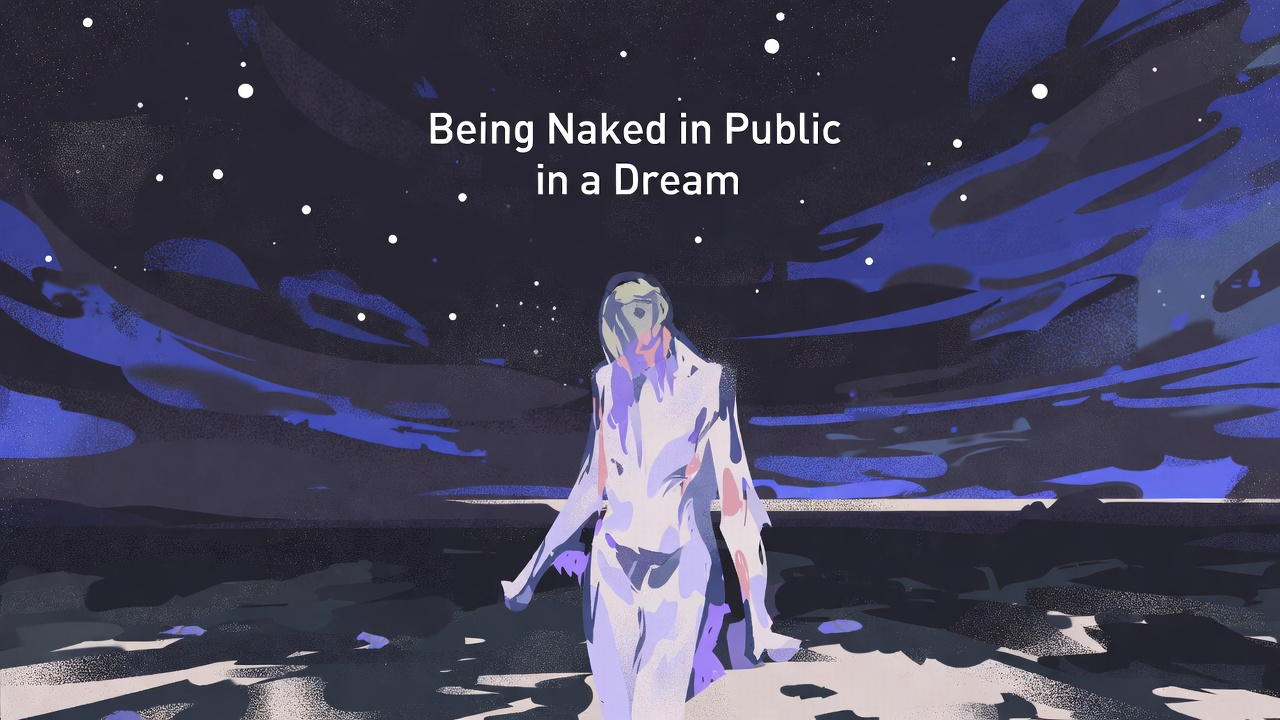
You’re standing in the middle of a crowded room, street, or stage… and suddenly you realize you’re completely naked. Everyone is staring. Your heart races, you try to cover up, but there’s nowhere to hide. You wake up flushed with embarrassment.
This is one of the most common — and mortifying — dreams people report.
Being naked in public isn’t random embarrassment. It’s your brain’s powerful way of spotlighting feelings of vulnerability, fear of being “seen” for who you really are, and worry about judgment in your waking life.
In this post we’ll dive into the real psychology and sleep science behind these dreams, the 6 most common meanings, how to decode the details in your specific dream, and practical steps to turn that exposed feeling into real confidence and self-acceptance.
How Common Are Naked in Public Dreams?
Extremely common.
- The Typical Dreams Questionnaire places “being naked or inappropriately dressed in public” in the global top 10 most frequent dream themes.
- Studies show lifetime prevalence between 40–70% across cultures, with spikes during periods of high social exposure, new roles, or when you feel emotionally “uncovered.”
- They’re especially frequent around job interviews, first dates, public speaking, starting school/college, or after any situation where you felt judged.
The Science Behind Naked in Public Dreams
Your brain chooses this scenario for very specific reasons:
1. Social Threat Simulation
According to threat simulation theory (Antti Revonsuo), dreams rehearse social threats in a safe environment. In our evolutionary past, being exposed in a group could mean rejection or loss of status. Your modern brain still uses the same “what if everyone sees the real me?” simulation.
2. Vulnerability & Self-Exposure
REM sleep is when the brain processes social emotions and self-image. When you feel emotionally exposed, afraid of rejection, or worried that people will discover your “flaws,” the dream makes that fear literal by removing your clothes — the ultimate symbol of protection and privacy.
3. Continuity Hypothesis
Dream content directly reflects waking concerns. These dreams surge when you’re stepping into a new identity (new job, relationship, parenting role) or when you’re hiding parts of yourself to fit in. The nakedness simply dramatizes the feeling of being seen without your usual “armor.”
In short: the dream isn’t about literal nudity — it’s your subconscious flagging where you feel vulnerable or afraid of true judgment.
The 6 Most Common Psychological Meanings
1. Fear of Being Truly Seen or Judged (The #1 Meaning)
This is the core interpretation. The dream highlights anxiety that if people saw the “real you” (your insecurities, mistakes, or true feelings), they would reject or criticize you.
2. Vulnerability in a New Situation or Role
Starting something new (job, relationship, moving, public role) often triggers these dreams. You feel “naked” because you haven’t built your usual confidence shield yet.
3. Impostor Syndrome or Feeling Like a Fraud
Common in high-achievers. The dream reflects worry that everyone will discover you’re not as competent or put-together as you appear.
4. Shame or Guilt You’re Carrying
If you’re hiding something (a mistake, secret habit, or past regret), the dream symbolizes fear that it will be exposed.
5. Desire for Authenticity vs. Fear of It
Sometimes the dream appears when you’re tired of wearing a “mask” and your subconscious is pushing you to show up more honestly — even though it feels scary.
6. The Positive Flip — Growing Self-Acceptance
When the dream ends with you feeling okay being naked or people reacting kindly, it signals you’re becoming more comfortable with your authentic self.
Pay Attention to These Dream Details
- Where are you naked?
Work/school → professional insecurity
With family/friends → emotional vulnerability
On stage → fear of public failure - How do people react?
Laughing/pointing → strong fear of ridicule
Not noticing → the issue may be more internal than external
Helping/cover you → growing self-compassion - Can you cover up or escape?
Failing to hide → feeling powerless to protect yourself
Suddenly having clothes → readiness to regain confidence - Recurring naked dreams
Strong signal that the underlying vulnerability hasn’t been addressed yet.
Self-Reflection Prompts (Answer These Tonight)
- In which area of my life right now do I feel most “exposed” or afraid of being judged?
- What new situation or role makes me feel like I’m showing up without my usual protection?
- What part of myself am I hiding because I fear rejection?
- If everyone saw the “real me,” what am I most afraid they would think?
- Where could I practice being a little more authentic this week?
- If I felt completely okay being “naked” in the dream, what would that freedom feel like in real life?
What To Do Next: Turn the Dream Into Confidence
These dreams are actually helpful invitations to build real self-acceptance. Here’s how to respond:
1. Dream Journal + Pattern Tracking
Write the dream and the situations where you felt exposed that day/week. Connections appear quickly.
2. Small Exposure Experiments
Share one small authentic thing (an opinion, a flaw, a story) with a safe person. Each time you do this, the brain updates its “threat level.”
3. Self-Compassion Practices Before Bed
- Write 3 things you genuinely like about yourself
- Do a quick body scan: “My body is safe. My mind is safe.”
- Progressive muscle relaxation to lower social anxiety
4. Reframing Technique
During the day, vividly replay the dream but imagine walking confidently as you are — and people smiling or not caring. Many people notice the dreams become neutral or empowering.
5. When to Seek Extra Support
If naked dreams are frequent and tied to intense social anxiety or low self-worth, short-term CBT or self-compassion-focused therapy works wonders
Final Thoughts
Dreaming you’re naked in public isn’t your mind being cruel — it’s your brain using one of the most universal human fears (social rejection) to highlight exactly where you long to feel safe being yourself.
Listen to it. Take one small step toward showing up more authentically, and you’ll start feeling less exposed — both in dreams and in waking life.
You don’t have to be perfect to be worthy of being seen. The real you is already enough.
Have you had a naked-in-public dream recently?
Where were you and how did it feel? Share in the comments.
Sweet (and hopefully fully clothed) dreams! ✨